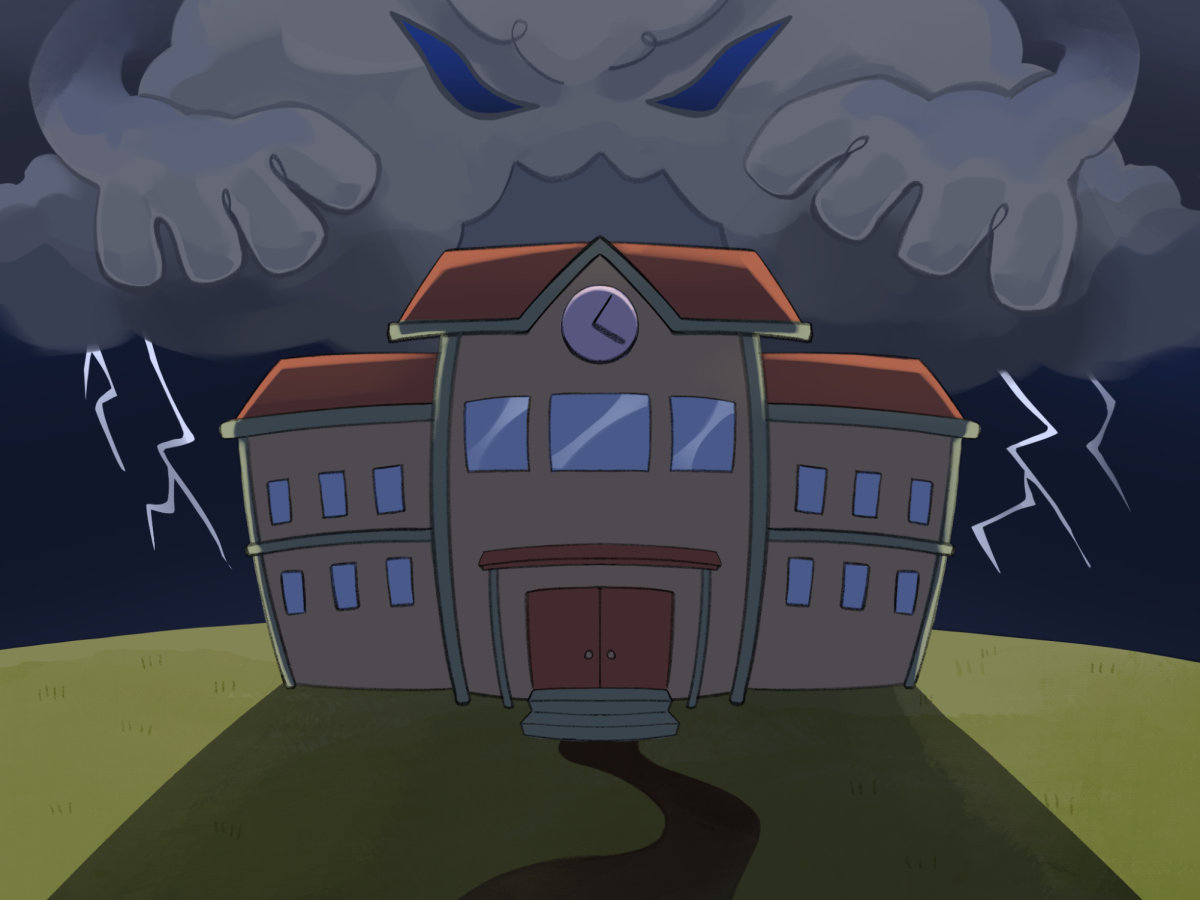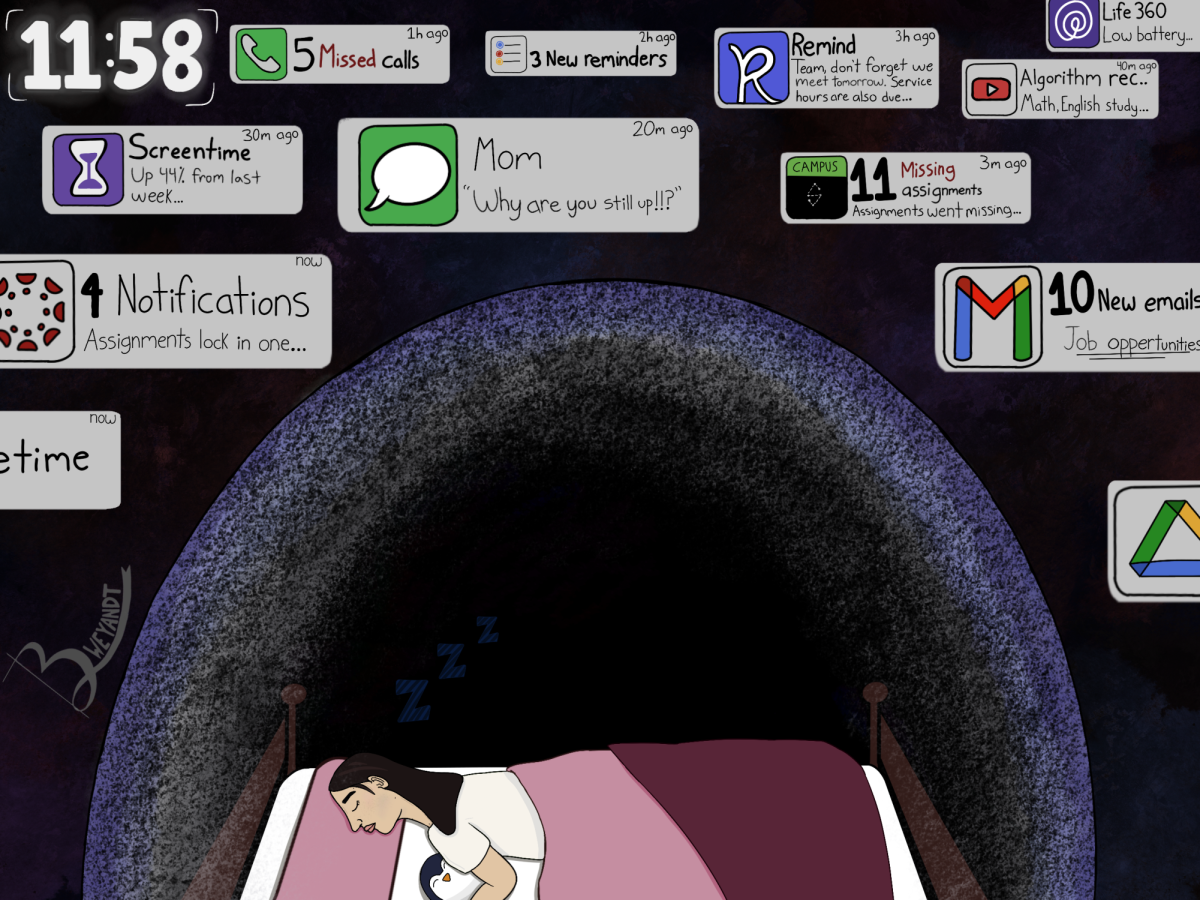
I glance at the clock and realize I have 14 minutes left until my Delta Math assignment locks. I am two iced coffees in, my hands are slightly shaking and my head is pounding with a 101-degree fever that I have been purposefully ignoring. My MacBook has too many tabs open and I refuse to check my grades in Infinite Campus because disappointment will not help. I am so consumed with my grades that I forget about my overflowing laundry basket, my growling stomach and the everything-shower that I keep postponing. My body is the last thing on my mind and honestly, it feels like an inconvenience.
We often forget to check in on ourselves when things in life are stressful. For example, finals season becomes a week where sleep is the last priority. Self-care starts to feel like a luxury that can only be rewarded after all responsibilities are completed. This occurs even in simple situations where basic needs are forgotten. When you have two minutes before you need to drive to work and you end up forgetting your water bottle, but end up just saying, “Oh no” and carry on. Although this can seem like it’s not a big deal, this continued self-negligence can lead to the absence of prioritizing self-care.
According to the International Self-Care Foundation, self-care is the act of doing things that are beneficial to your well-being. This includes eating food, keeping up with personal hygiene and sleeping well enough for your body. These actions not only encourage a coordinated body, but also a stable routine that helps calm you down. Although self-care can be pushed and avoided at times, the consequences that may follow are highly underestimated. Yes, there are times where you can avoid sleep and be fine, but over time it will affect your coordination and mind. Having moments of stress and anxiety, like leaving your water bottle behind, can lead to a lot more than just dehydration.
Many people argue that high pressure times make self-care seem unrealistic. This mentality of “sleep when you’re dead” means sacrificing personal time to succeed. After all, deadlines don’t slow down and assignments do lock. Pushing through exhaustion often seems like a disciplined and dedicated approach. However, this mindset can be so harmful. A Harvard study suggests that a good night’s sleep and self-care will increase test scores due to alertness and focus. Taking care of yourself allows you to show up and complete more tasks with a more alert mindset, rather than barely surviving and working off of pure motivation. When deciding between saving time or saving yourself, it is imperative to choose yourself, even when it feels like you shouldn’t.
Although I can agree that the stress of missing school can turn studying into a late-night, disorientated battle of disappointment, self-care is vital. If you need to miss a day of school, then you need to miss a day of school.
Self-care is not optional, especially during times of great stress. Although sometimes people think basic needs should be sacrificed to maximize productivity and work, it can just create long-term consequences that negatively impact a person’s future. Sleep in and be late, if it means that you can have your water bottle.