

Las Vegas: Where New Dreams Begin











America has long been lauded as being a melting pot of cultures, an ideal that champions the fusion of diverse backgrounds to create a new, quintessentially “American” whole that reflects its diverse population.
Nowhere is this vision more vividly embodied than the Las Vegas Valley; the city is nearly 22% foreign born, meaning that about 1 out of every 5 people in Las Vegas classify as an immigrant. This diversity has created a new, uniquely Vegas culture specially for the 21st century, one that comprises all the traditions and values that has made it into the landmark it is today.
Following the rise of Las Vegas’s booming tourism and hospitality industry in the 1960s, the city has become a place of opportunity for many American immigrants, allowing them the opportunity to create a better life.
From what started off as a gambling city, a trend of hotel casinos was built in the 1970s that made the city more suitable for families, followed by other forms of entertainment more suitable for all age groups. This change set the foundation for businesses to target a larger demographic, including people of other cultures, expanding Las Vegas’ outreach.
The root of much of Las Vegas’ expansion and development began in the 1930s, when the construction of the Hoover Dam not only employed thousands of locals, but also individuals from across the United States, as well as members of several Native American tribes. The Hoover Dam was one of the most advanced at the time and the use of hydro-technology not only supplied Vegas with water, but was crucial for the development of Las Vegas into the sparkling city it is known as today.
“The first Strip hotel was the El Rancho Vegas, built in 1941. It was small, western-style,” UNLV Department of History associate professor Michael Green said. “The Last Frontier, the next year, followed, with a much stronger western theme. The Flamingo is important as the first truly luxurious Strip hotel, though the standards of luxury when it opened in 1946 were different than those today. With the Flamingo’s success … others followed: The Thunderbird, tied to the same group as the Flamingo, the Desert Inn, the Sands, the Sahara, the Riviera, the Dunes; the Hacienda, the Tropicana and the Stardust, all built between 1948 to 1958.”
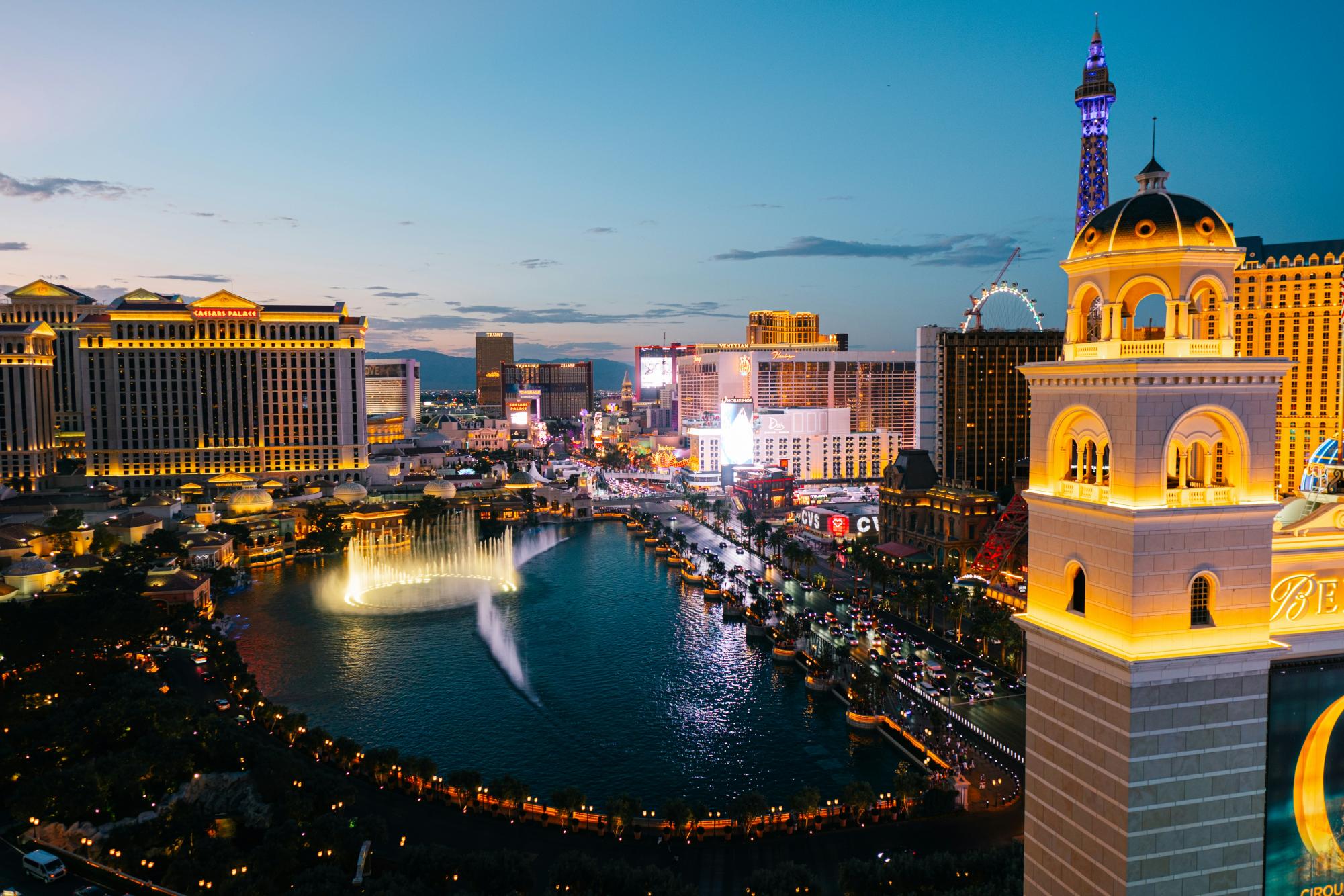
With many new attractions opening in the 1990s, such as the Luxor, Paris and Bellagio, it created many job openings. Most of which did not require extensive schooling or skills, making it a perfect place for newcomers to start a new life.
“My mom started in the hospitality industry when she was 15. My grandpa started when he was probably 15 as well,” Christian said. “My grandparents were cleaners and managers of restaurants; they built their way up in society, from being at the lower [end of] the chain to the height of the chain of the casino. By working their way up in a casino, [especially] being an immigrant, it allowed them to make connections and meet famous celebrities that made their restaurant bigger and helped provide for their family.”
According to the U.S. Census Bureau, Las Vegas experienced an exponential growth from 1990 to 2000, starting from a population of 700,000 to over a million by the end of the century. The 2000 Census report also states that Nevada’s %age of foreign-born was 15.8%, slightly above the national average of 11.1% at the time.
“As the population grew with the tourism industry’s success, more people came to Las Vegas to look for gold at the end of the rainbow,” Green said. “With their success, more followed. The saying at the time was that you could buy a home and lead a middle-class lifestyle here on a working person’s salary. A big contributor was the Culinary Union, which organized well to deal with the influx and keep the hotels going.”
These increased tourism levels not only created jobs for those immigrating to Las Vegas, but also allowed for the pursuit of the traditional American Dream, where immigrants had the opportunity to build themselves up in society and create a name for themselves.
“My mom is an auditor for MGM and works in an office building that supports the casino,” senior Timothy Christian said. “There are a lot of benefits to working in a casino, where they can provide scholarships for your children. It [also] helped us make essential connections to gain citizenship and live a life in America, [as well as] having good friends and good people that you can rely on.”
Prior to the 2000s, iconic areas of the city, including the Strip, were primarily focused on young adults and activities such as gambling, nightlife and shows. As the city’s reputation continued to grow in the new century, many resorts expanded their attractions to be more family-based, creating a city for a melting pot of different backgrounds and ages.
“I just love the mixture of cultures and I think it’s awesome that we get to experience people from all sorts of different types of life,” Vital Minds Student Therapist Jordin Hodson said. “I immigrated from South Africa. I don’t think there are too many South Africans anywhere, really, at least, not in the States. I have seen different cultures come in. Some of my neighbors are from Mexico, so I get to chat with them a lot, which is cool. I met my best friend here; she’s from Colombia, so that was really cool too. I’ve seen a couple of different cultures, just not a lot of South Africans.”
Las Vegas is known as a city of bright lights and high energy, a fantasy destination for many. On the global stage, it’s marked as a “Disneyland” for adults, a place to be “exempt” from everyday societal norms and the professional face of work life.
Many people immigrate to Las Vegas every day in search of a supportive home. For those seeking new opportunities and the chance to fulfill the American dream, Las Vegas acts like a magnet.
“My move from California to Las Vegas involved evaluating cost of living differences, employment opportunities and quality of life factors,” server William Tejeda said. “The process included several key components like assessing financial considerations, coordinating the move and integrating into the local community. The transition provided valuable insight into housing and adjusting to the new pace and culture.”
Migration to Las Vegas comes from a variety of reasons. A pin point focus being job opportunities, as Las Vegas is well known for its hospitality and construction industries. In Nevada, 25% of the labor force are foreign-born workers, including 43% of hotel doormen, front desk staff and porters. 74% are found to be hotel housekeepers and 51% are restaurant line cooks. Many of those key workers cite Las Vegas’ hospitality being a prominent push factor for moving to the city, with hotel chains like JW Marriott offering J-1 visas for their employees, allowing non-citizens to reside in America for employment.
“People come in search of jobs and most people that do reside here, end up working on the Strip. There are mass amounts of work positions that give good pay for the cost of living,” real estate agent Karla Trevino said. “Another benefit is that the jobs last. Because Las Vegas is known for its Strip and is constantly evolving, jobs can almost always be guaranteed.”
Additionally, the American Dream, the belief that everyone can prosper and achieve success in America, is a common reason for general migration. A land where anyone can succeed, no matter where they come from, their class or their race.
Yet once in America, many fall short of reaching this ideal, as the American dream heavily falls short on one thing—being easily achievable for anybody.
“I was initially from Ghana and came to California [in search of something exciting]. Eventually, I had kids and they were expensive. I could not afford or sustain a good life in California,” truck driver Kwama Ankomae said. “I ended up moving to Las Vegas because it was close, convenient and cheaper. I like it here, a lot better than California where the American dream is just not realistic.”
Affordable housing is another common reason for migration to Las Vegas. Immigrants come to Vegas to find a place to call home that supplies them with the resources needed to achieve their dreams, such as affordable housing, cultural communities and job opportunities.
Las Vegas provides more resources outside of housing and job opportunities. Las Vegas provides many educational opportunities for immigrants, such as allowing undocumented immigrants to qualify for in-state tuition benefits, community and financial support.
“As a real estate agent most of my client portfolio consists of people who are constantly trying to reach a new job opportunity, get a cheaper cost of living or just to find a place to call home. Because Las Vegas is so known, it is a place where many go,” Trevino said. “And although tourists see it as neon lights and partying, people move here because there is opportunity, regardless of race, ethnicity, or religion. This place is a mix between fun and cheaper in comparison to California.”
Las Vegas provides more resources outside of housing and job opportunities. Las Vegas provides many educational opportunities for immigrants, such as allowing undocumented immigrants to qualify for in-state tuition benefits, community and financial support.
“I didn’t have the opportunity to go to school in my country,” Strip chef Yolanda Alcocer said. “My home is very dangerous and I took advantage of the opportunity to come to the US to work hard like I learned to when I was a little girl. I chose Las Vegas because my economic situation was bad and I saw the opportunity to work in something I like, [which is culinary and hospitality], that’s within my capacity and circumstances, all with God’s help and the good friends that supported me.”
But what sets Las Vegas apart from other cities is the cultural diversity. Due to the state’s job market and a history of welcoming diversity—Las Vegas becomes a melting pot for many cultures alike. Components such as strongly established ethnic communities lead many to move to the state and find their sense of belonging.
“As a first generation American, I feel like Las Vegas is a great place to choose as a home due to its immense diversity,” junior Jamille Westley said. “My family is able to express themselves and feel more comfortable because there are so many different people here and many who have similar stories. From the food, to the music and religion, it’s an overall diverse place to be. Living in Vegas as immigrants provides opportunity.”
While most Americans may associate the culture of Las Vegas with the spectacle and glamour of The Strip, the true heart of Las Vegas can be found in the homes and neighborhoods of immigrants, who cultivate rich traditions and serve as the essential contributors to the city’s cultural landscape.
Las Vegas is home to immigrants from over 50 countries, most notably from nations in Latin America and Asia. This diaspora, most concentrated in Clark County, has helped local practices and allowed immigrants to preserve their culture from their country, even though they may be far from home.
“I’ve connected a lot with the Filipino community here, I have a lot of Filipino friends and a lot of them are Filipino teachers,” physics teacher Susanna Alvior said. Alvior moved to the U.S. in 2024 as a cultural exchange teacher from the Philippines with a J-1 Visa. “We hang out every weekend and I get to speak, well, not my dialect, Hiligaynon, but I at least get to speak Tagalog. So, it’s not just always English … because all the instruction, [English is] what it’s in.”
For immigrants who came from monocultural nations, where a single dominant culture, language and set of traditions tend to prevail, Las Vegas has given them exposure to many other holidays and practices and has allowed them to share their own culture with the community.
Here, a person from a small town in Russia might now find themselves living next to neighbors that hail from Mexico, India, or Ethiopia. They hear new languages in their grocery stores, see diverse fashion styles and take part in Diwali or Cinco de Mayo celebrations, a phenomenon that’d be impossible to experience in some other regions of America such as Maine and Vermont, which both have a 94% white population.
“I actively engage in traditional Vietnamese holidays such as ‘Tết’, which is the Vietnamese Lunar New Year,” junior Jenna Tran said. “It’s a holiday where we gather our family and friends to celebrate the Lunar New Year together … Living in Las Vegas, I got to see decorations everyone has set up for different holidays. On Halloween, they would decorate their house with scary mannequins, creepy music and fake webs. On Christmas, I would see Christmas lights outside, ornaments on their trees and Christmas trees.”
This cultural exchange is cemented by festivals such as Greek Fest, the Great American Foodie Fest, the Asian Lantern Festival and hundreds of others that allow for exposure to various foods, art forms and music from different parts of the world. These events have boosted the Vegas economy and solidified the city’s community by bringing in people to learn and engage in these traditions, a fact unique to the city due to its identity as a regular tourist destination.
“My family, we continue to celebrate [holidays] how people celebrate in China,” senior Ziying Chen said. “We make something called Zongzi for certain holidays, for example, the Dragon Boat Festival. It’s a dumpling made of rice and then we would eat it to celebrate the holiday. To celebrate Chinese New Year, parents will give out red envelopes with money inside them for children and we would wear red on New Year’s for good luck.”
Additionally, there are at least 302 religious organizations representing diverse denominations in Las Vegas, boasting 500 churches spanning major religions such as Christianity, Judaism, Sikhism and Hinduism.
Approximately 61% of people in Las Vegas identify as Christian, a significant decrease compared to 69% of total Americans, which signifies a wider variety of religious beliefs compared to the majority of the country.
“When our church comes together, the energy I see comes from the relationships built within the community,” Full Gospel Las Vegas Church Youth Pastor Joshua Kim said. “You get to see the older and younger generations coming together to get things ready for church until we need to wrap things up and put everything back for the next gathering and it is a joy to hear laughter, to see everyone serving together and to see them engage in fun and meaningful interactions. We help teach Korean food, language and its culture to the people in our church community, but we also allow others to share their culture with us as well … we have a Latino church community within and they share their cultural food and language with us.”
Notably, Las Vegas has a reputation for being a distinct food destination. Being ranked No. 9 in the nation for their diverse food scene, the city is home to a wide array of cuisines. Food tours are a popular attraction in Las Vegas, with both locals and tourists being able to go on tasting journeys both on The Strip, Las Vegas Downtown and the Arts District to sample dishes from different countries.
“Las Vegas’s food and hospitality industry exists because of its immigrant communities,” pastry chef Kimberly Bakke said. “They’re the backbone of everything that we are. Immigrants bring their traditions, recipes and hospitality values with them, which has shaped the city into a place where you can find authentic food from just about every part of the world.”
Las Vegas continues to expand, allowing for more immigrants to come and practice their culture in the city. In Oct. 2025, Las Vegas officially designated Filipinotown, a cultural enclave for Pinoy businesses and culture that’s similar to the already existing Chinatown and Shanghai Plaza. Alongside food, these hubs allow for multicultural businesses to flourish.
“These businesses serve as community spaces where culture is celebrated daily, not just through food, but through language, hospitality and shared experiences,” Bakke said. “They help ensure that cultural diversity is visible and valued. I encourage all students to try a new food, explore your own roots and support a local immigrant-owned business. It’s what keeps our city alive and connected.”
In Las Vegas, English and Spanish are the most widely spoken languages, alongside other various Arabic and Asian languages.
Clark County School District (CCSD) supports a large variety of diverse languages through programs known as English Language Learner (ELL) programs, dual-language programs such as Spanish and world language courses offered for academic credit. While only English proficiency is required for graduation, CCSD encourages students to develop additional language skills through recognition and awards like the Seal of Biliteracy.
“It’s really important to learn about foreign languages and communicate with them here in Las Vegas,” junior Branden To said. “We are such a diverse community and I think that learning languages and all of their nuances really opens up your perspective and world view and you’re more understanding of different perspectives. Learning Spanish has personally helped me communicate with others. I remember a while back construction workers went to my house … and we were able to have a small conversation in Spanish, so it was good that I was able to communicate with them.”
With the various cultures that Las Vegas has to offer, it has become an integral part of the community and a place that unifies traditions for both residents and tourists. In the process, it has grown into a city that is ingrained in multiculturalism.
“Vegas is very diverse and it’s one of the spots that had a lottery for a visa in [Ethiopia],” junior Agape Haile said. “My parents immigrated here because of that lottery. They got lucky and so did a lot of people who were of the same religion as me, so that brought a lot of cultures to Vegas. Diversity here is needed in general. It would be boring if everyone were from the same culture. Everyone needs their own different opinions. That’s what makes it special to be in Vegas.”
Today, the role of immigrants in Las Vegas is a central one. The city is shaped by immigrant-owned businesses, groups and cultural institutions that form the backbone of its large community. Even with the rise of recent federal immigration enforcement actions, these neighborhoods are continuing to thrive alongside their immigrant neighbors.
Immigrant-based businesses and institutions have grown significantly, with immigrants making up 26.7 percent of entrepreneurs and 24 percent of the city’s labor force. Communities have grown and developed throughout the city, with immigrant business owners and consumers becoming a central part of the Las Vegas landscape.
“I’ve seen how immigrant families work hard, start businesses and support local communities,” local business owner Evangeline Paulin Bess said. “Many immigrants fill important jobs and help keep businesses and services running. In a city like Las Vegas, immigrants play a big role in the economy and help the city continue to grow.”
However, with the implementation of recent immigration policies, migrant communities have seen the city undergo significant changes. Locals have expressed concerns over recent raids by the United States Immigration and Customs Enforcement (ICE), as migrant community members fear detainment and begin to experience the effects of these crackdowns.
“Immigration enforcement has affected many communities,” Bess said. “Even people who are citizens or have legal status can feel worried for their families. In Las Vegas, this fear can make people less willing to go out, work or speak up. This affects businesses, employees and families in the community.”
State labor unions have since reported a significant decline in tourism, one of the most vital aspects of the state economy. Small businesses have taken a hit as well, reporting lower sales due to customer concerns of detainment. Major communities, such as the Broadacres Market, faced significant losses after temporarily closing to prevent raids on their events, after ICE activity was confirmed in Southern Nevada.
“Even if ICE is not as prevalent in Nevada, that doesn’t at all mean that this place is safe,” senior Adrian Cruz said. “Lots of my family from the Philippines are scared to go out to large public events, fearing that ICE is attending them. This happened after my Tito was nearly taken. [He] only wasn’t because he spoke perfect English, which most of my family does not.”
Migrant-focused institutions have also reported drops in attendance and foot traffic, as families may avoid public spaces out of fear. Educators in the Clark County School District (CCSD) have shared stories of parents pulling kids out of school to avoid being detained on their way to and from campus. Community activities and celebrations of culture have been canceled or postponed to avoid immigration crackdowns.
“Fear mongering of ICE has especially prevented people in my community from holding neighborhood gatherings,” Cruz said. “We used to have cookouts outside the neighborhood with anyone that wanted to show up. Many of which were Hispanic, Filipino or Native American. Ever since the rise of ICE, there’s been no talk of anything of the sort. In all honesty, it scares me for the future.”
Immigrant-owned businesses are also beginning to see signs of recovery. Business owners are adapting to the fears and needs of their customers, as sales for other markets have reportedly started to pick up. At Broadacres Market, some vendors have noticed the return of families who stopped visiting during peak periods of immigration enforcement, as the market works to restore a sense of safety for families.
“Some immigrant families are more hesitant to seek help or healthcare because they are afraid or confused about their rights,” Bess said. “Patients feel more stressed or anxious because they worry about immigration issues affecting themselves or their loved ones. To respond, we focus on building trust and explaining that mental healthcare is private and safe. Making people feel comfortable is very important.”
In neighborhoods, public celebrations may have dwindled, but cultural traditions have not disappeared. Cultural heritage remains within communities and can be practiced safely in private spaces. Even amid fear, community leaders have begun discussing the potential return of cultural festivals and events that were previously canceled.
“Lots of our traditions are held within the household rather than in public,” Cruz said. “For my sister’s 15th birthday, she wanted to celebrate her quinceañera in Las Vegas, rather than back home. Much of our family came to visit and the night itself was so special. It made me realize that my culture is established in the people rather than the place. It made me feel at home.”
Las Vegas continues to endure as a city built on diversity and resilience, as immigrants remain an essential part of the city. The future of Las Vegas may be uncertain, but it is shaped by the communities that support it.
“What gives me hope is how strong immigrant communities are,” Bess said. “Many young people from immigrant families are becoming leaders, business owners and healthcare workers. Even during difficult times, immigrant communities continue to support each other and move forward. That gives me confidence in the future.”