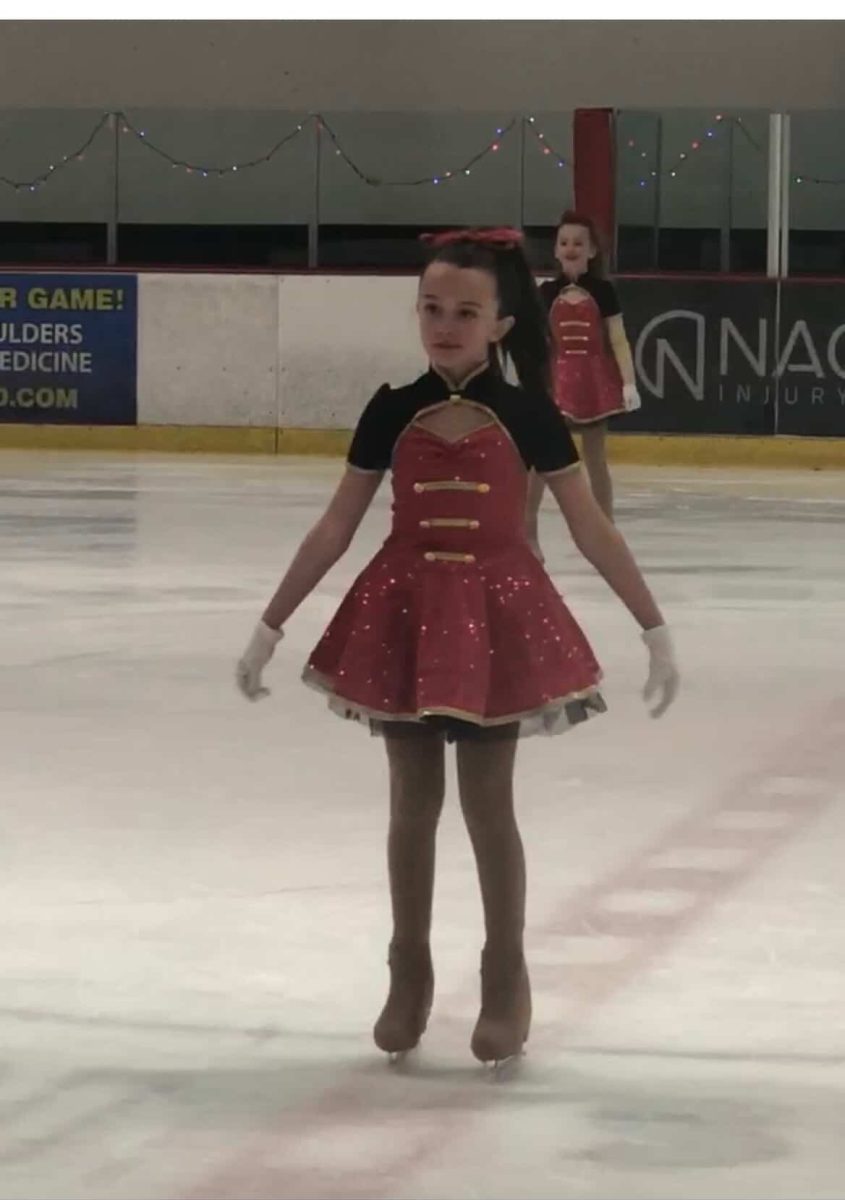
As blades scrape the ice-cold rink, sophomore Sophia Adams turns, flips and jumps on the ice with precision and delicacy.
For more than half of her life, Adams has dedicated herself to the art of figure skating, being exposed to the motions of struggle, wins and failures.
“I started [figure skating] at five.” Adams said. “I think I was around 7 years old when I got into competing. My coach said that it would be a good idea, just in case that I wanted to actually do something with figure skating later on in life. It would be good to start competitions early.”
Having a strong work ethic has helped Adams with motivation and confidence, but that was not always the case.
“I think that when I first started out, I was always like, ‘Oh I have to do this the best I can and that I can’t mess up’,” Adams said. “But now that I’ve got to build a relationship with my coaches, I feel like I can work at my own pace and don’t really worry about what they think and just try my best.”
Early on, Adams grasped the mindset of a professional athlete, making sure to handle her personal life with care.
“I would just try to stay on top of my work and not let everything pile up”. Adams said. “Skating took up a lot of my schedule, but I made sure to still fit in school and things I enjoyed when I could. Planning out my week beforehand also really helped me and as time went on, it got easier to balance everything.”
While the average child athlete plays a specific sport for less than three years, Adams’ figure skating has run for ten years.
“I’ve always enjoyed it and it feels nice to be on the ice,” Adams said. “I don’t know, just being able to do tricks. [Also] the fact that it’s not very popular and not a lot of people do it, I just wanted to keep up with it.”
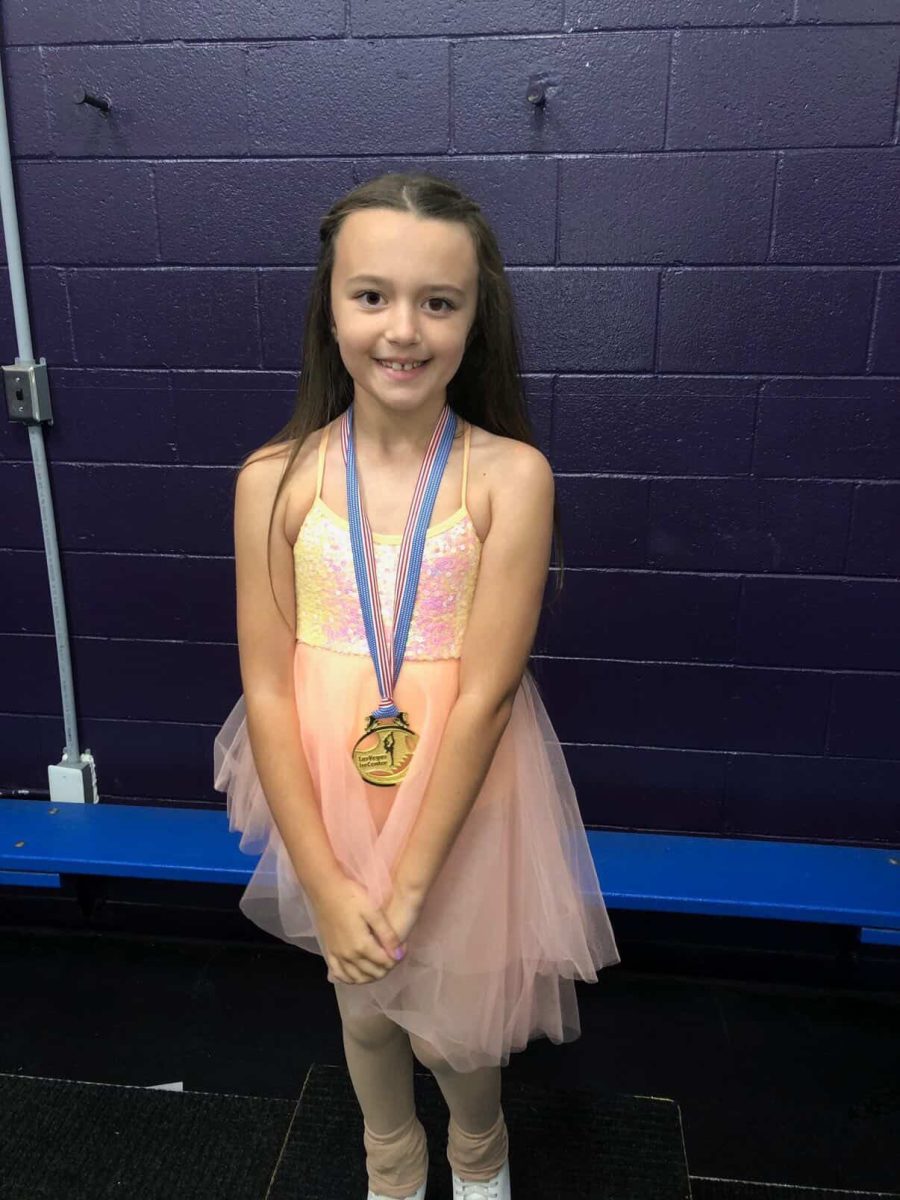
Figure skating is a sport of many different techniques; tricks, flips and turns make up each captivating performance.
“I would say that I’m pretty good at the footwork part of it,” Adams said. “I’m better at spins than I am at jumps. When I was around 12 or 13, I decided to work on my single axle and then I got it sometime last year.”
As much as the pressure was put on Adams, she was kept grounded with her support system.
“I made sure to both physically and emotionally support her alongside with her father by showing up to as many practices and competitions I could,” Adam’s mother, Snezana Uljar said. “As well as make sure she knew how proud I was of her and how much I wanted her to continue in competitions, as well as just figure skating in general.”
As time went, on Adams had an important decision to make.
“I just think that once I got to a certain level and things started getting harder, I had more pressure on me from my coaches.” Adams said. “So I think that’s really the reason why I got stressed and went on to quit.”
Throughout all the trials and tribulations, Adams reflects on her time well spent on a memorable part of her life.
“[I learned] not [to] give up, Adams said. “Most of the tricks in figure skating can take you a really long time to get down. I think it also made me more hardworking and more determined, even during school, I kind of learned that determination from figure skating.”