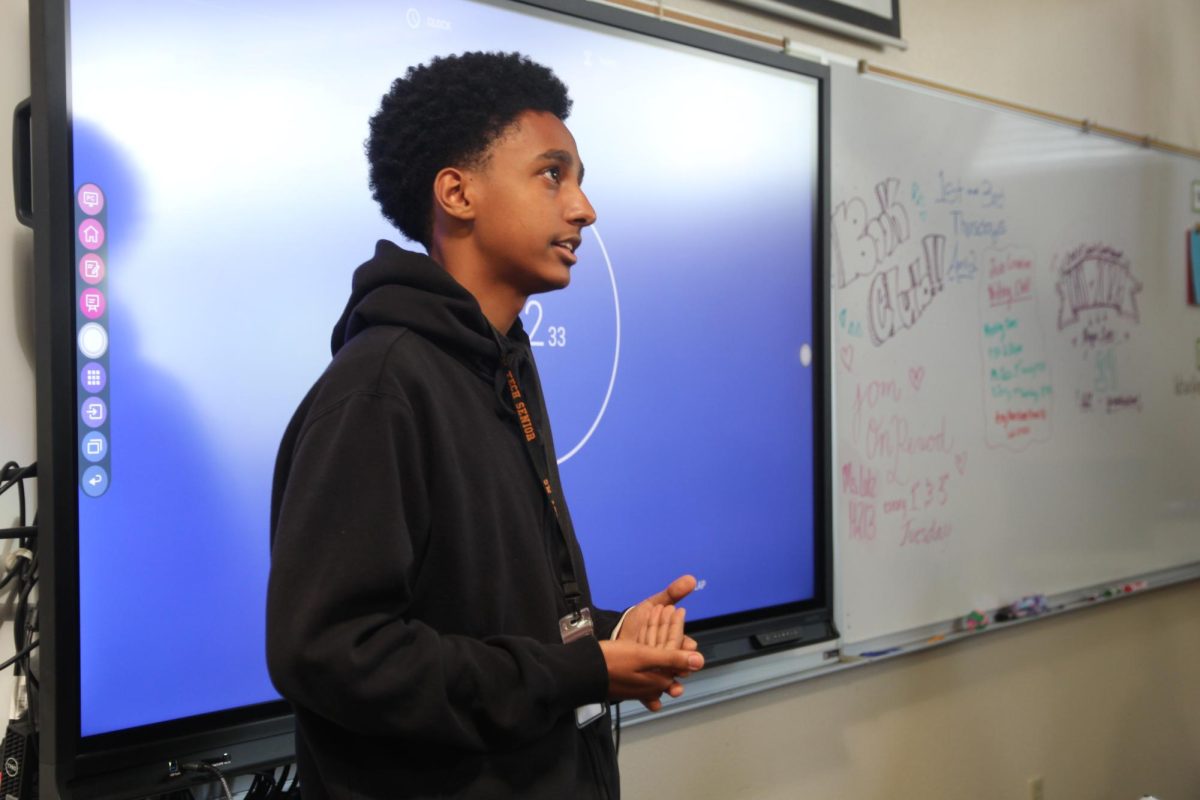
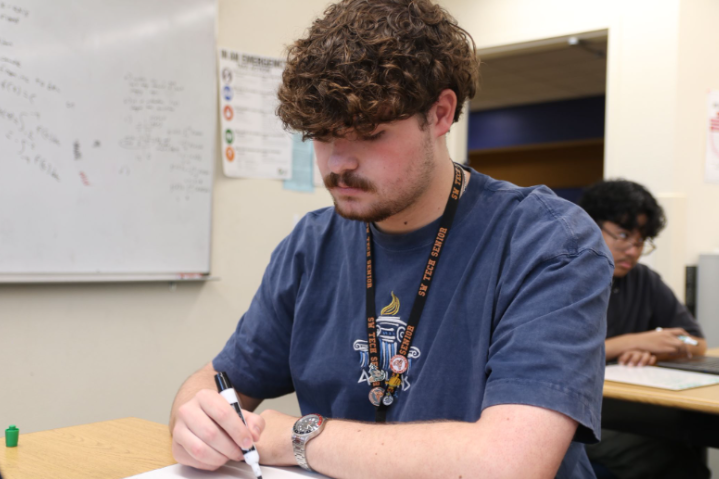
As Artificial Intelligence (AI) continues to advance, Social studies teachers like Joshua Needy and Joseph Juliano implement the usage of AI into the curriculum of their U.S history and Political Science classes to ensure the students have the necessary support to complete the curriculum.
For example, Joshua Needy adapts to AI as a new standard in education, choosing to implement machine driven learning as an assist to his students.
“I’m more of a forward-thinking teacher, thinking about what the future is going to look like in the classroom,” Needy said. “So I really do believe that AI will be one of the more widely used tools in the classroom itself, so I’m trying to get a head start on it right now.”
Needy aims to expand to different AI options for students to use, but mainly uses Perplexity as a leading resource.
“My preference is always going to be Perplexity, especially when it comes to research, because it does provide the sourcing automatically for students,” Needy said. “[With] ChatGPT, you’re able to get the sourcing, but it is an extra one or two steps to actually getting the sourcing. Whereas Perplexity just gives you the sourcing automatically. As far as the information that Perplexity gives you, Perplexity gives pretty similar amounts of information, but that element of providing the sources for the students is the main reason I prefer it.”
The reactions from those enrolled in Needy’s class have been generally positive.
“I think everybody’s pretty on board with it,” junior Tatiana Robles said. “It’s important because we do get to learn stuff that we don’t already know and the AI can help us get a better understanding of what we’re learning.”
With the norm of AI, Needy is focusing on the benefits of reduced time in instruction with intelligent technology interaction in the near future as AI is optimized for students.
“I think that it’s a new day in age. AI really has a way of making processes and stuff that used to take multiple hours in some situations to a couple of minutes,” Needy said. “Instead of me giving a lecture with certain success criteria and questions that I’m trying to answer for my students, or giving them a research worksheet or anything along those lines that takes upwards of an hour to two hours to get done, we’re able to get prompting questions for research and then allow for students to get the same outcomes and the same answers to the questions in a couple minutes versus hours.”
Other teachers, like Joseph Juliano, find AI as a helpful language model to deepen student understanding of a topic or to clarify questions.
“If it’s a history class, we might use it to say, ‘What are some good primary sources from political leaders that help us understand compromise before the Civil War?’” Juliano said. “We’re not necessarily just asking for an answer, we’re asking for more information that we can use and apply our skills in history and evaluating sources and making arguments.”
Although this tool provides improved resources, some educators may worry about the potential misuse of AI among students.
“If you get overly reliant on just letting the tool think for you, you’re really putting yourself behind when it comes to being able to function in college and the real world,” Juliano said. “Where the people that are gonna stand out the most in the future are the people that can think creatively, can think on their feet on their own, without having to rely on someone telling them.”
![Construction continues at Little China Plaza, located west of Southwest CTA. The project moves toward its expected completion in late 2026. “It’s a cool opportunity to see and know more businesses, because there’s already a new Urban Matcha here,” senior Roman Maynigo said. “I just think [it’s amazing] of the practicality of [everything] in the area.](https://southwestshadow.com/wp-content/uploads/2026/05/Screenshot-2026-05-08-103248.png)