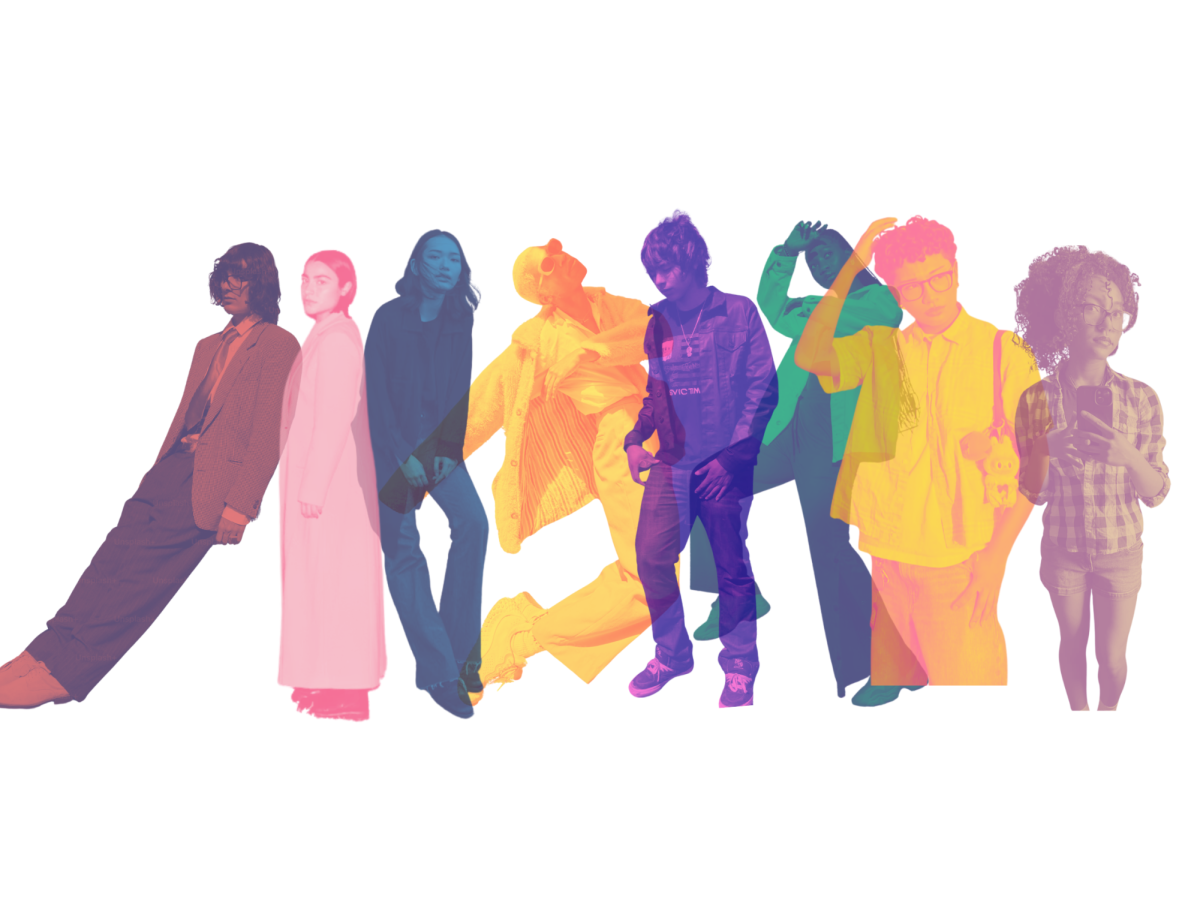
Imagine scrolling through your feed and pausing on a perfectly curated outfit: muted earth tones, loose silhouettes, chunky silver jewelry. Without reading a single caption, you already know exactly who that person is.
Or at least, who they want to be.
In the social media era, fashion aesthetics have become the primary language of self-expression. On these platforms, users are curating their identities through the visual archetypes of their clothing, from the ethereal “cottagecore”, the gritty “cyberpunk” or the sleek “office siren”.
“When I dress the way I want to dress, I feel like I can actually go out and enjoy myself,” senior Mark Martinez said. “I’m not ever too worried about how other people perceive me. I do this because I like it.”
This visual shorthand allows people to communicate their tastes and values. For fashion, aesthetics provide communities for shopping and dressing, offering a sense of belonging and a road map for personal style.
“A bunch of people are worried about fitting into certain aesthetics,” freshman Gianna James said. “But to me, I think it should all be about individuality. People should just wear what they’re comfortable in and what they like and enjoy.”
However, just because somebody opts to dress within a specific aesthetic doesn’t necessarily mean that most people are limited to wearing items from that specific niche. There are many ways that people vary their outfits outside of cookie cutter styles.
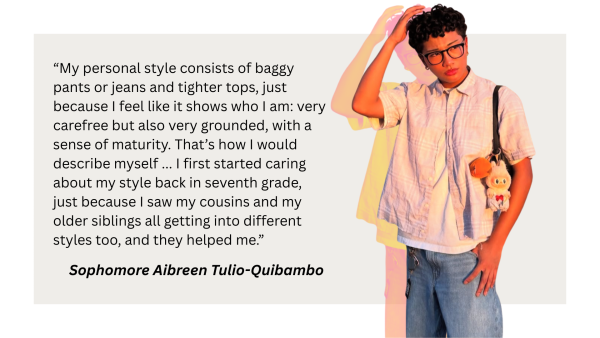
An example of this is people integrating their ethnic or cultural backgrounds into their everyday fashion. Through styling different cultural symbols, fabrics and attire, people are able to covertly represent their own traditions while still keeping to a specific aesthetic or style. Not only does this make an outfit more representative of the person wearing it, but it can also help symbolize the history of that culture, bringing awareness to their heritage in places where it isn’t typically seen.
“Because I’m Filipino, I sometimes wear a barong, and I also have a lot of Filipino flag shirts and jackets to represent my country,” sophomore Aibreen Tulio-Quiambao said. “I wear gold, too, because of the Philippines because before they were colonized. We used to be dripped down [in gold]. I can also say that my jewelry and my cross represent my religion, and I bring it back to how pre-colonial Philippines was introduced to Christianity and Catholicism.”
Personal values can also be veraciously conveyed through style. For example, principles such as individualism can be seen through the curation of unique pieces or eccentric silhouettes. The existence of subcultures in the mainstream media, such as goth, punk and emo, can give young people a better understanding of their own values as well as find communities of like-minded people.
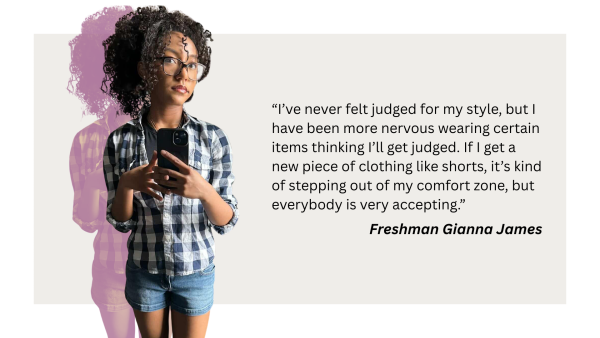
“The grunge and the punk community really influenced my style,” freshman Gianna James said. “They influenced me to be more like who I am. I feel like I try to hold the values of the subcultures I’m interested in, and it’s a big deal to me too, having those values.”
It can also be less important to people what someone is wearing, but where they got it. The rise of fast fashion brands such as SHEIN and Temu has divided the fashion community because of their detrimental humanitarian effects, such as using exploitative labor practices. To combat this, many fashion enthusiasts choose to shop secondhand for its environmental benefits.
“Usually, I would go to the thrift and just look around and see what interests me the most,” senior Mark Martinez said. “I would take inspiration from social media and just try to find stuff like that at the thrift … It’s too expensive to shop for new clothes and I can’t really ever find clothes in regular stores compared to thrifting. I found more clothes that are my style there.”
Unlike past generations where alternative fashion existed in these niche groups, Gen Z has grown up with social media as a fashion equalizer. This constant, algorithm-driven exposure has desensitized mainstream culture to bolder stylistic choices: bright hair colors, heavy piercings, exaggerated silhouettes and are no longer shocking to the general public but are instead celebrated as creative.
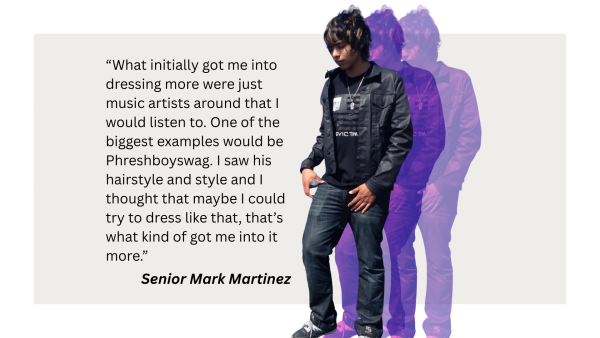
“I would dress more formally outside than in school,” senior Mark Martinez said. “You know, you’re supposed to dress more formally in school than when you’re outside but it’s kind of like the opposite for me. In school, I can kind of loosen up because everybody’s around the same age, but in public there’s older people and I don’t want to look too much like a teenager because then I feel like people will look down on me.”
Despite this, people still find fashion to be an incredibly powerful way to express confidence and taste. Whether it’s a favorite jacket or a bold accessory, what people wear has the ability to transform how they feel about themselves from the inside out.
“When I was first starting out with fashion, I did feel pressure to dress a certain way, but now I honestly don’t think that it matters,” sophomore Aibreen Tulio-Quiambao said. “As long as you have clothes to wear, that’s a privilege in itself. Recognizing that, I think if you stop caring about what other people think, you get to live your most authentic life.”





![Many teenagers are reluctant to receive professional support for mental health. There are various factors that play into teens not getting the help that they need. “[Teenagers] might feel that even though they're talking to someone, they still don't feel heard,” freshman Jaeda Gonzales said. “I've noticed that a lot of times when I try to talk to someone about my problems, it doesn't really click [with] them. [It’s] like they're making up their own story about my story in their head and they're just getting it all twisted.”](https://southwestshadow.com/wp-content/uploads/2026/05/mental-help-graphic.jpg)
![Many food trends gain attention because of viral influencers or appealing visual aspects. This has continually drawn approval and admiration from consumers before they had even tried the product. “Food trends [are popular] because it’s such a big build-up, especially from influencers,” junior Myles Jenkins said. “They think something’s cool, then they post it everywhere on social media, and then other people just want to do it so they can experience it and post about it. People want to just feel seen by doing the same thing, especially with food, a common way that people could connect.”](https://southwestshadow.com/wp-content/uploads/2026/04/2-1200x800.png)