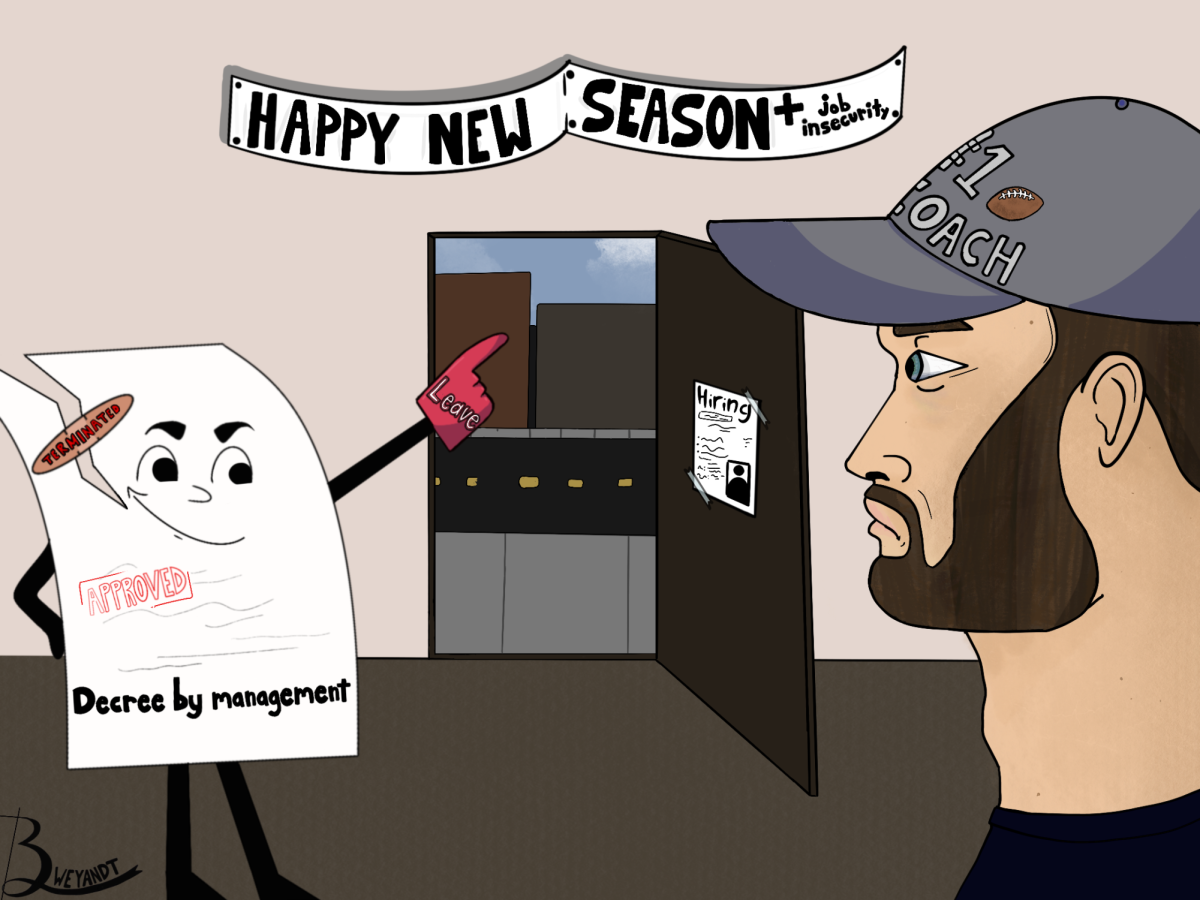
Difficult decisions are what define the most successful corporations, yet NFL owners continue to ignore proper development and growth by prematurely firing coaches. Franchise ownership is no longer managing a small team, as they’ve grown to the likes of major consumer brands and need to be managed with a heightened seriousness. It feels as though many decisions are arbitrary, failing staff, players, and especially fans.
The main contributor to this issue is the lack of progression toward a championship, with head coaches flying in and out the door if immediate success is not met. It’s almost as if NFL owners fail to see that development takes time, and a limited sample size is not the final product.
A clear example is the 2022 Carolina Panthers under head coach Matt Rhule, who was brought on as a “program builder” by owner David Tepper. Rhule signed a 7-year contract and was expected to slowly rebuild the team, yet he was fired midway through his third season due to the team’s performance. The biggest takeaway from Rhule’s story is that Tepper understood a long rebuild was underway and even said Rhule could “build an organization for the next 30 to 40 years.” Countless similar stories have echoed across the league; however, this sudden panic in owners has only become a practice in the past 30 years as the NFL grows exponentially.
Looking back at great dynasties like Chuck Noll’s Steelers, Don Shula’s Dolphins, and Bill Walsh’s 49ers, fans saw early struggles, rebuilds, and then championships. This luxury is no longer given to coaches with ownership’s growing impatience. This is largely due to the media attention that follows a missed playoff appearance or a prolonged losing streak, which puts pressure on owners to take action. A plethora of NFL teams haven’t had a postseason victory in the last decade, and are raising the question: why are teams getting worse?
Franchises are steadily taking longer gaps to win playoff games. Even after the implementation of the 14-team playoff format, teams are still taking longer to reach the coveted playoff win due to ownership intervention or the lack thereof. The coach turnaround furthers this narrative as teams are prevented from peaking before any post-season victory. Another reason for the decline in playoff wins comes from the purgatory teams are forced into after mediocracy. Being trapped at picks 15-20 where contracts remain high but talent is lacking opposed to early or late picks.
The only direction to point blame at is ownership. Global brands are suffering simply because the head chair lacks the effort or is fueled by tweets and ESPN articles. Unfortunately, there is no clear path to fix this continuing issue. However, franchises can take notes from the success of others. Teams with proper ownership are less likely to experience playoff droughts attributed to patience, selective intervention, team first focus, facility improvements, and modern approaches, such as improving operational staff. Simply put, spend more money and time on the team, and receive better results.
Although investing more into a team seems obvious, teams with the same valuations and profits have vastly different outcomes that can only be chalked up to the choices boards and owners make. Repetitively firing coaches will only cement organizations in their chronic inadequacy.