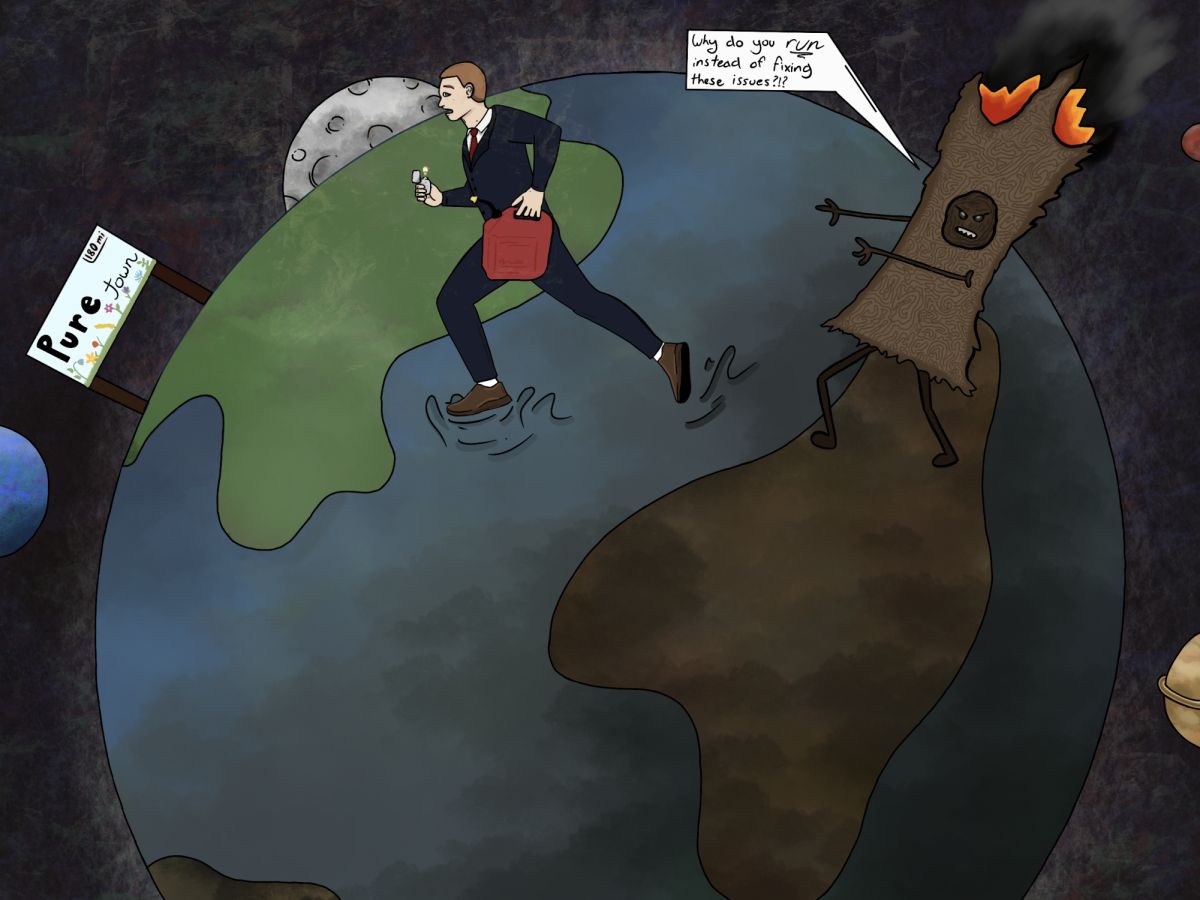
Lately, I’ve been noticing just how hard it is to afford even the basics. Whether it is food or rent, it feels like simply getting by is increasingly becoming more difficult. While this is happening, billions of dollars are being spent on space exploration. I get that space is exciting, it always has been; but at some point, I can’t help but wonder: why does it feel like we’re more focused on leaving Earth than fixing it?
I understand why modern lunar missions still capture a lot of global attention. Programs like NASA’s Artemis missions that focus on returning humans to the Moon and establishing a long-term, sustainable space presence is impressive. When humans first reached the Moon during the Apollo 11 Moon Landing, it was seen as one of the greatest achievements in history. Even now, I still see many of these missions as a testament to what humans are capable of.
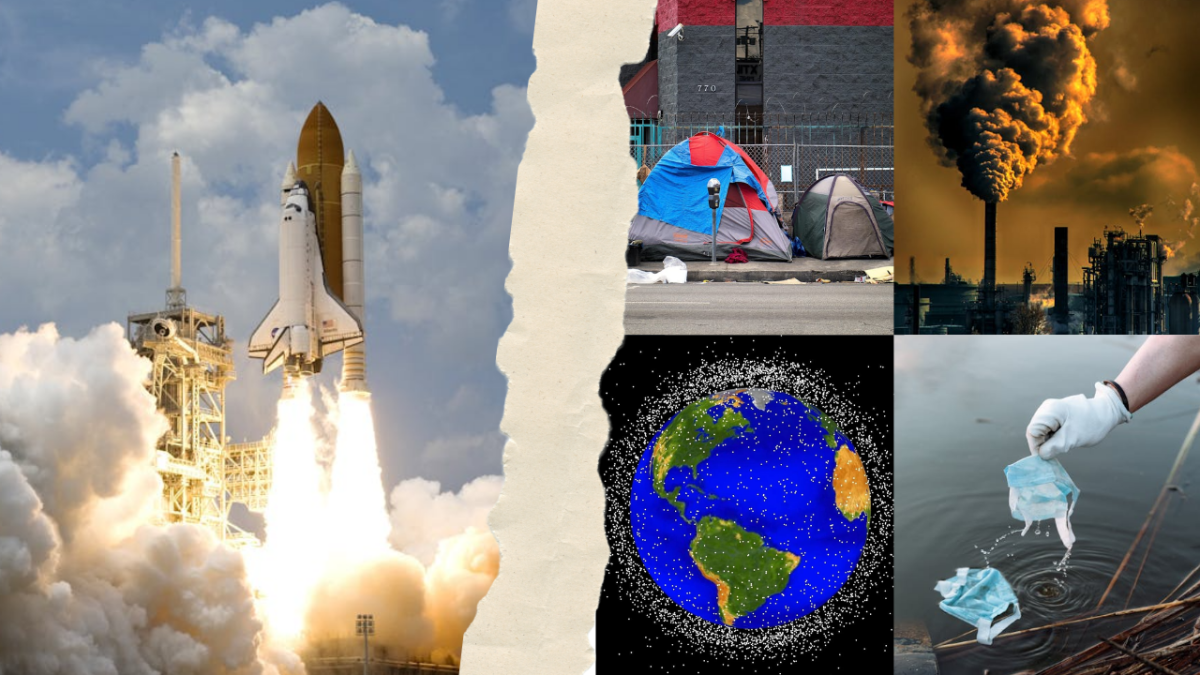
Yet with the ongoing human expansion on the moon, I am constantly reminded of the same issue: the cost. Human spaceflight has always required massive amounts of money. The Apollo program alone cost $25 billion at the time, which is worth around $150 billion today. Programs like the Space Shuttle went even further, costing about $224 billion overall, with each launch costing hundreds of millions of dollars. Even today, billions continue to be spent on space exploration, with over $27.8 billion going towards missions and rocket launches. This amount of money is hard to even wrap your head around, especially when there are so many problems on Earth still waiting for solutions.
In order for humans to survive, they need shelter, food, water and medical care. With many struggling to have the four fundamental things for survival, why do we prioritize exploring space?
Across the world, millions of people still struggle with basic necessities. In fact, around two billion people don’t even have access to clean water. That means around 24% of people are struggling with something as basic as finding safe water to drink every single day. Adding to this issue, climate change and pollution continue to get worse. Events such as rising temperatures and sea levels have affected things that we depend upon, such as ecosystems and human health. So, when I see the amount of money going into space, it’s difficult not to question what exactly our main priority is.
If anything, space exploration can actually create more problems for us. For instance, rocket launches release harmful chemicals into the atmosphere, including carbon dioxide and other pollutants. These emissions contribute to the same environmental issues we’ve struggled to control. On top of that, space itself is becoming increasingly cluttered. There are millions of pieces of debris and thousands of satellites orbiting Earth, increasing the risk of dangerous collisions. Not only are there around 100 million pieces of space debris, that number is constantly growing.
Where Do our priorities stand? by Amelia Castellanos
Another thing to consider is whether humans even need to be the ones going to space in the first place.
Robotic missions have proven that they can do much of the same work for a fraction of the cost. The Mars Pathfinder mission was able to collect valuable data for $265 million, which is far less than any human mission. Robots can also go places that would be too dangerous for humans and they don’t require life support systems or expensive safety measures. Compared to humans, they are a much more efficient option in many cases.
Of course, there are arguments for human space travel. Don’t get me wrong, I know humans can think and adapt to unexpected situations in ways robots can’t. There have been missions where astronauts had to fix major issues in space. However, that doesn’t mean the risks of these missions should be ignored. Astronauts face serious dangers including radiation exposure, isolation and physical strain on their bodies. When you combine these risks with the massive cost, it becomes hard to truly justify.
Space exploration is still incredible, there’s obviously no denying that. It’s an impressive representation of how much humans have progressed. That being said, just because something is possible doesn’t mean it’s necessary. When we look at the billions being spent in space and the problems still happening here on Earth, do we really have our priorities straight? So, maybe instead of always looking up to space, we should spend more time focusing on the problems we’re currently facing here on Earth.