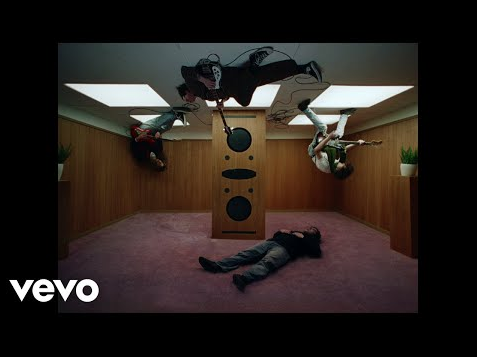
Through shifting tempos and layered indie rock elements, Culture Wars constructs an emotional narrative centered on heartbreak and healing. Each track contributes to a larger exploration of Love’s Aftermath, balancing subdued instrumentals with moments of intensity.
“Don’t Speak” fully leans into the themes of heartbreak and emotional tension. Culture Wars built their identity around blending indie rock with emotionally-driven soundscapes, being known for their smooth guitar work and introspective lyrics. Culture Wars gradually developed a style that balances soft, vulnerable moments with louder, more intense instrumentals. In earlier songs, they reflect a focus on feelings, which carries through in their debut album, “Don’t Speak”, where their growth as artists is evident through more refined production and emotional storytelling, ultimately showcasing their ability to connect deeply with listeners.
Their first song, and the album’s namesake, “Don’t Speak,” starts with a rock-like guitar introduction. The vocals are very soft, yet have instances where they crescendo in volume, giving the song a powerful tone in its more intense moments. While listening to this song, I especially took notice of the lyrics, “Don’t speak a word of it / Don’t let it live in silence / Don’t let your hand get bit,” At the songs core, the line suggests the tension created by not speaking up and staying silent in a relationship that’s already hurting. These lyrics reflect the confusion and emotional conflict that comes from wanting to protect yourself, but also knowing that communication is important and that avoiding it can make situations worse. Throughout the song, the drums are mellow and the guitar is soothing to hear; the mood is gloomy with the lyrics, but the background music is loud and emotional. My overal view on this song is emotional and steady, you can clearly understand the point and it gets across amazingly.
The next song, “Bittersweet,” was heartbreaking to listen to; it reminded me of a similar heartbreak I had experienced. With the sad lyrics, “And I wait / to sit inside all day / and I may / Get the feeling I could bend before you break away.” Right from the beginning, you can tell this is about heartbreak. It seems to explore the emotional exhaustion in a relationship where one person is more invested than the other. It’s about waiting, uncertainty and the quiet fear of being the one who bends too much to avoid losing someone. “I see why you lead me on/ but you don’t know, you don’t know anymore.” This feels like a moment of emotional clarity after confusion. The singer is realizing that they’ve been emotionally strung along, but also realizes that the other person isn’t necessarily in control or fully aware either. It’s less about blame and more about recognizing mutual disconnection. The background music in the middle of the song brings back so many memories of songs that I listened to as a kid, such as Glass Animals and Neon Trees, like the songs “Everybody talks” and “Heatwaves.”
Additionally, the song “Tokyo” leads into some somber elements about not being over your ex-lover. For example, “Sun in your eyes, but I still can’t get you off my mind / and I will go blind, but I still can’t get you off my mind.” It can also be about an overwhelming fixation on someone that persists, even when it’s painful or destructive. The contrast between the sun and the loss of sight creates a paradox; the more intense and visible that this person is in the singer’s life, the more that it changes their ability to think clearly. What was confusing is that one song later, it brings us to the song called “Heaven,” which clearly displays a person who is happy in their relationship, which distorts the whole meaning of the rest of the album. While I am not fully complaining, this album sounds confusing with its mixed meanings; for example, one line off of “Heaven” is “And you feel like heaven under your arms/ and in your lips/ all I have is your love.” These lyrics clearly idealize love that feels euphoric and consuming. The other person is almost worshipped, while the singer reveals emotional reliance.
Lastly, the ending songs had no transitions into them, which was a little disappointing. The second-to-last song, “cortisol, it’s not always what’s in your head,” immediately reminded me of a Gen-Z meme called “low cortisol.” because of the title, however The lyrics represent somethinf completely different by saying, “Come and call my name / Then treating me like I’m the one to blame,” hit different as they reflect a toxic cycle, such as attention, attachment and blame. It’s about being pulled into a connection, then being made responsible for its problems. Finally, the last song, “Lies” repeats the line, “I’m on my own again.” Within this lyric you could find many different meanings, but the way I interpreted it was that the singer had lost the love of their life and is on their own again, trying to find meaning.
In the end, this album had many deep meanings, which I found to be relatable and easy to understand. The indie-rock vibes and the amazing vocals brought each song together. While I had wished there was some transition into each song, the amazing music made up for it. I would listen to their future songs. While writing this, they gained over 400,000 more listeners, which I find amazing considering they are a small, indie band. I’m glad they were able to get the spotlight they deserve, especially considering the mastery over songwriting they have displayed in this album.