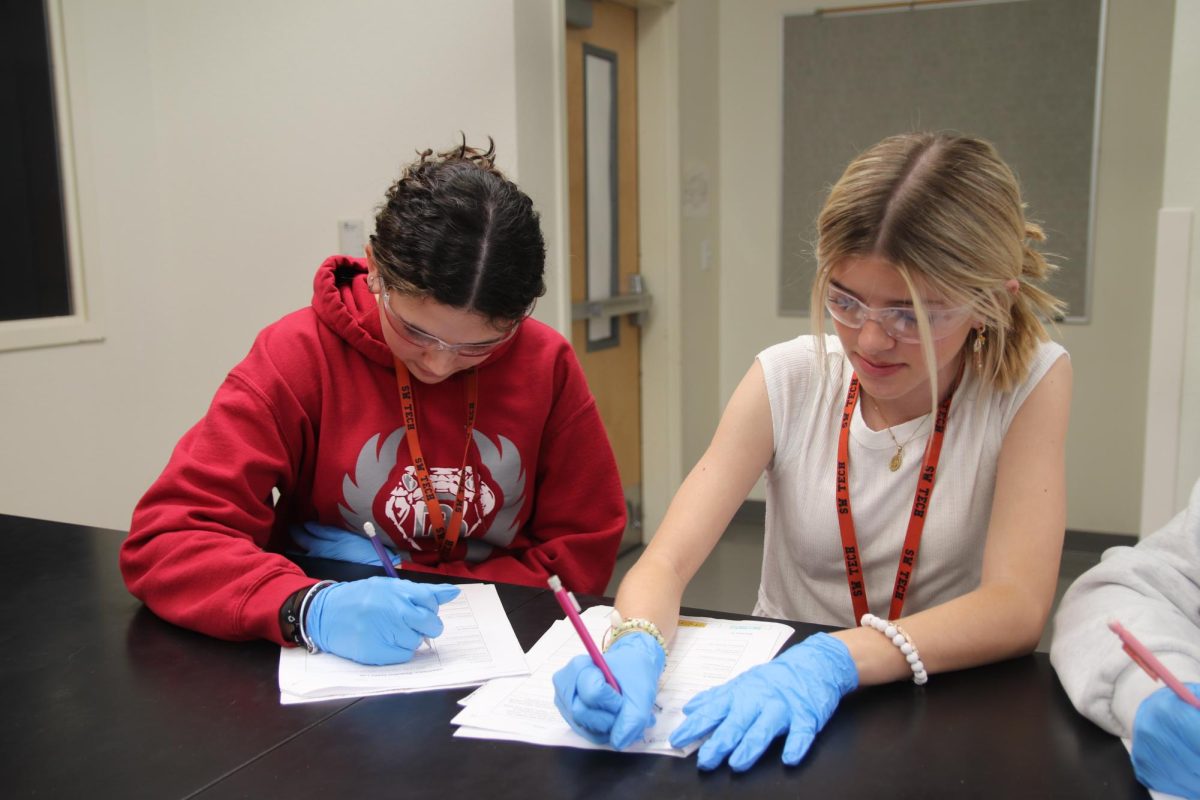
The kitchen is often referred to as the heart of a restaurant, a place where creativity meets precision. But in many kitchens, that heartbeat is uneven. While food has evolved, the culture behind it still carries traces of old expectations.
For decades, professional cooking has been viewed as a “man’s world,” even though women have long been the ones cooking at home. From culinary schools to fine-dining restaurants, female chefs often find themselves working harder to prove their skills in environments still shaped by tradition. Some blame subtle biases or assumptions about strength and leadership. Others say progress is slowly being made as the industry begins to question what a “chef” should look like. All these factors influence how women are seen and how far they can rise.
“It’s a really physically demanding job,” Chef Julia Homan said, “There’s naturally some stereotype and bias that comes in with that. For example, I am five feet tall. So if we have other equipment higher up, it’s automatically a sign that she can’t do it. Sometimes it’s truly a physical limitation. If everything’s stored up high, or the industry size that you store things, it can immediately come across that women chefs aren’t as qualified.”
For example, the French competition called the “World Pastry Cup (Coupe du Monde de la Pâtisserie)” requires people to carry their own sugar sculptures. While the rules don’t explicitly discriminate against women, they get eliminated from the competition almost immediately.
“You’re carrying around hundreds of pounds of sugar sculptures, but instead of being able to put them on a trolley, you have to move them yourself. That’s a requirement,” Homan said, “For a woman, that’s really daunting, right? So, it automatically eliminates women from that competition, so they almost don’t have a chance from the beginning.”
According to Zippia, only about 12.5 percent of all women become chefs in the United States, with 6.3 percent of those women becoming executive or head chefs. Yet due to these perceptions, women working as higher-level chefs are often taken less seriously than their male counterparts. Their expertise and leadership may be questioned or undervalued simply due to gender-based assumptions within the profession.
“People tend not to take us as seriously,” Chef Kimberly Bakke said, “This is definitely a male-dominated industry and that carries the challenges of not always being seen as ‘equal to’. Women aren’t always seen in the same light and therefore don’t always get the same opportunities. It’s unfair. Gender should not dictate your capabilities.”
Many women continue to break through the barriers that hold them back. Across the country, women are opening restaurants, leading culinary programs and redefining what leadership in the kitchen looks like. Chefs such as Dominique Crenn, Clare Smyth and Mashama Bailey have shown that success in the culinary world is not bound by gender, but by creativity and resilience.
“In the future, I want to open a bakery, and the way I plan on treating my chefs equally is by not being biased in the kitchen regarding who does what,” Junior Reneeh Harris said . “For example, I won’t shun one gender to the dish pit and will ensure that all my workers are versed in all forms of pastry making.”
There is a growing recognition for how diversity in the kitchen can lead to more diverse menus and stronger teams. When a variety of voices are included, it is possible to see a wider range of cultural influences and ideas reflected in the food. Incorporating different perspectives can contribute to the creativity of a restaurant and lead to improvements that could have a positive impact on the industry.
“One of the chefs I look up to is Chef Bakke,” junior Angela De Leon said. “She’s one of my teachers, and she’s been teaching me alongside the other chefs for the past three years. I admire her not only because she’s been in the field and done some pretty inspiring things, but also because she has worked with some amazing people like Gordon Ramsay.”
Programs like workshops and mentorships can help break down stereotypes and offer support to female chefs, encouraging more young women to follow their dreams in cooking.
“My message to any feminine-presenting students out there would be to keep being unapologetically you,” Bakke said. “Be strong. Be loud. Take up space. Don’t let people tell you what you can and can’t do. At the end of the day, most importantly: be proud.”


![Many teenagers are reluctant to receive professional support for mental health. There are various factors that play into teens not getting the help that they need. “[Teenagers] might feel that even though they're talking to someone, they still don't feel heard,” freshman Jaeda Gonzales said. “I've noticed that a lot of times when I try to talk to someone about my problems, it doesn't really click [with] them. [It’s] like they're making up their own story about my story in their head and they're just getting it all twisted.”](https://southwestshadow.com/wp-content/uploads/2026/05/mental-help-graphic.jpg)
![Many food trends gain attention because of viral influencers or appealing visual aspects. This has continually drawn approval and admiration from consumers before they had even tried the product. “Food trends [are popular] because it’s such a big build-up, especially from influencers,” junior Myles Jenkins said. “They think something’s cool, then they post it everywhere on social media, and then other people just want to do it so they can experience it and post about it. People want to just feel seen by doing the same thing, especially with food, a common way that people could connect.”](https://southwestshadow.com/wp-content/uploads/2026/04/2-1200x800.png)