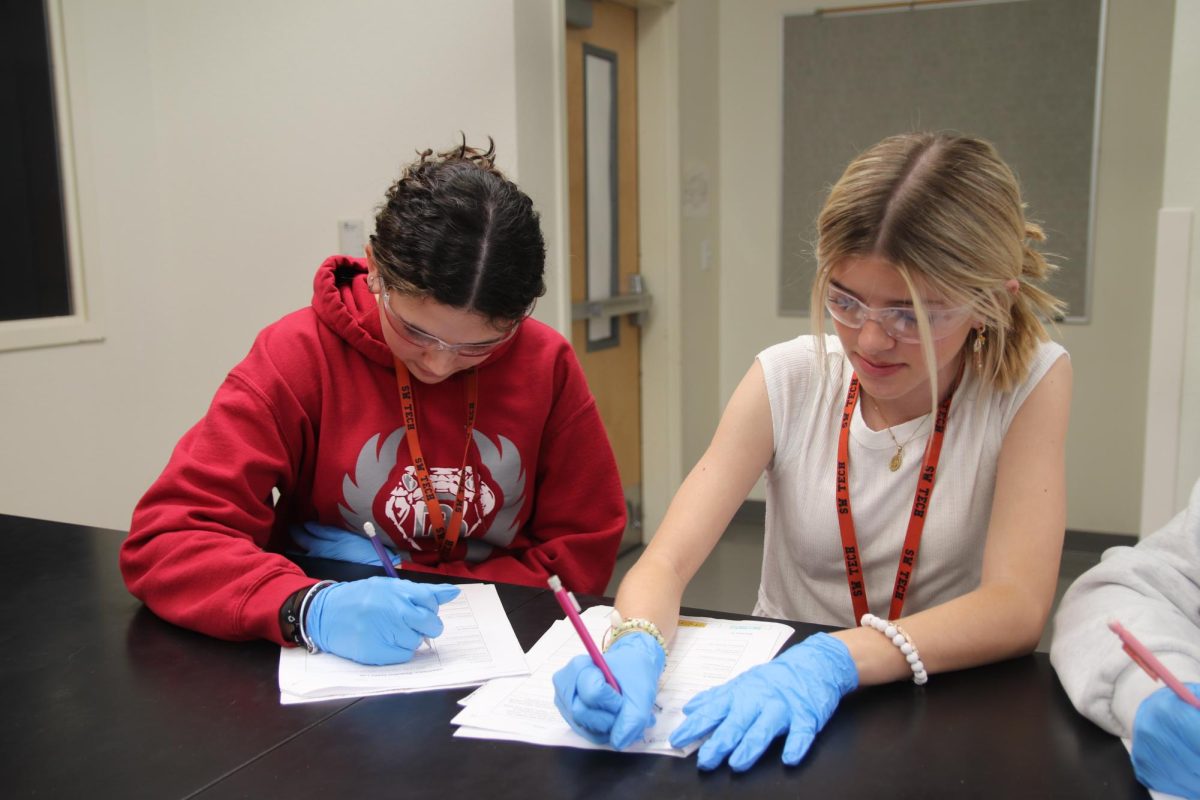
![Today, paper assignments are rare, with everything being done digitally. Handwriting has been a basic skill learned for centuries, and with technology advancing rapidly, the art is at risk of becoming obsolete. “I don’t think it will necessarily disappear, but maybe just be less used,” sophomore Angel Samson said. “Especially with new developments of AI and other technologies, [typing] will probably be the preferred method of doing things rather than handwriting.”](https://southwestshadow.com/wp-content/uploads/2026/01/IMG_9803-1200x673.jpg)
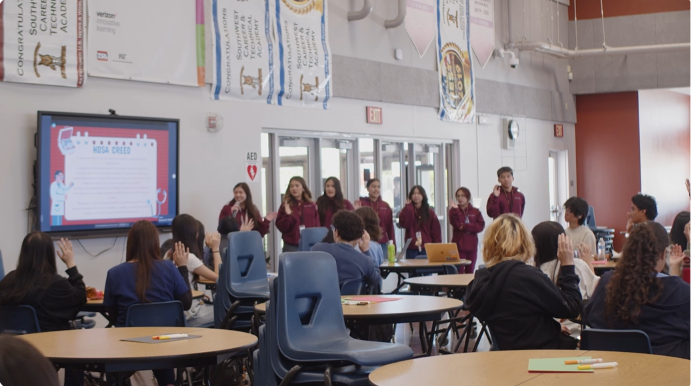
Handwriting is a skill dating back centuries. Originating around 3000 B.C, handwriting was a way for communication and a vital skill needed to live daily life. Yet, the art of handwriting has slowly begun to fade. Not just cursive, but the basic skill of penmanship overall. From the sounds of pencils writing on paper, the glow of a computer screen now takes over. Notes, letters and assignments that used to be written are now typed on devices present in every classroom. This shift to digital convenience questions the relevance of handwriting in modern-day use.
With technology rapidly advancing, the need for writing has become less prevalent in people’s day to day lives, as an increasingly high amount of assignments, documents or sources of information are accessed on a device. This has led to students relying on their computers to complete different tasks. According to the Indian Defense Review, 40% of students struggle with handwriting. Even with some assignments still being on paper, students are losing the skill and endurance to write.
“Not only the legibility of the writing, but the complaints, students get tired faster,” English teacher Maritza De La Fuente said. “I am from a generation where we were writing five-plus-page essays in school and that was the rough draft and it was normal. We weren’t typing unless we were taken to a lab. And now kids get tired of writing a paragraph. I quite literally have them shaking out their hands or being like, ‘I can’t do that.’”
Students have shifted to relying only on their devices to take notes or complete assignments. As technology progresses, about 91% of businesses are participating in a form of digital initiative and 87% of senior business leaders say that digitalization is a priority.
“I think convenience was what [creators of AI] started off with. That was the intent, but now I feel like it’s a necessity,” De La Fuente said. “Nowadays, everything is being rushed to digital. You don’t even write checks anymore. They don’t accept it, they want everything digital. So I feel like what started off as a convenience has now been pushed into an inconvenience for some people.”
The sounds of keyboards are common, with teens typing away for an assignment or to take notes. Though most students have been leaning towards digital convenience, the art of handwriting is still present in a select few. Those who utilize handwriting see the practice as a personal, creative outlet.
“As a person who uses handwriting more so than digital, I love to write so that I know I’m processing more information of what the teacher is saying and interpret more so of what’s going on,” senior Danna Kim said. “It makes me more creative to organize my notes, allowing me to section the paper into categories of what topics I’m wanting to talk about. Digital format doesn’t help me with that and rather feels as if I’m reading notes that are novels.”
Although fast paced typing is a benefit for many, handwriting is still a key skill. According to the Iowa Reading Research Center, handwriting is a basic tool that helps students create strong relationships between early writing and reading skills in grade school.
“It’s not just a way of communication, it’s also a way to improve finer motor skills and remember letters and words,” senior Ryan Cruz said. “I think that handwriting is an important skill to have because it’s what the letters we have are based on. In the event that you don’t have a digital device you wouldn’t be able to write anything down.”
Though it’s a dying art, handwriting is still commonly used. It helps develop important skills assisting students in taking notes, tests or remembering information. Handwriting is also used in other contexts other than school and can be used in work, personal expression or in communicating.
“Handwriting skills are somewhat necessary because you’re able to properly sharpen your handwriting to make it neat and legible,” junior Joy Park said. “[Handwriting] is really useful especially when you go to countries that don’t have access to digital technology like computers or keyboards, like in schools people still use chalkboards where you have to learn how to write.”
It is inevitable that technology is becoming more incorporated into modern society. As handwriting has become less and less used, there is the concern of what would happen if this art was completely lost.
“I think we’ll lose more creativity than we do now with technology becoming more useful in our lives. AI, for example, has been taking away younger generations’ ability to think and have more cognitive skills,” Kim said. “Therefore, it’s just allowing us to be more dull minded and make us more susceptible to cheating. It also makes me wonder if we’re not critically thinking like we did in the past, are we becoming more stupid for the upcoming future?”


![Many teenagers are reluctant to receive professional support for mental health. There are various factors that play into teens not getting the help that they need. “[Teenagers] might feel that even though they're talking to someone, they still don't feel heard,” freshman Jaeda Gonzales said. “I've noticed that a lot of times when I try to talk to someone about my problems, it doesn't really click [with] them. [It’s] like they're making up their own story about my story in their head and they're just getting it all twisted.”](https://southwestshadow.com/wp-content/uploads/2026/05/mental-help-graphic.jpg)
![Many food trends gain attention because of viral influencers or appealing visual aspects. This has continually drawn approval and admiration from consumers before they had even tried the product. “Food trends [are popular] because it’s such a big build-up, especially from influencers,” junior Myles Jenkins said. “They think something’s cool, then they post it everywhere on social media, and then other people just want to do it so they can experience it and post about it. People want to just feel seen by doing the same thing, especially with food, a common way that people could connect.”](https://southwestshadow.com/wp-content/uploads/2026/04/2-1200x800.png)