
![The fear of missing out (FOMO) has been shown to have adverse effects on many teenagers’ confidence. FOMO is especially commonly experienced in teenagers. “I think the most frustrating part about experiencing FOMO is the fact that you can't necessarily do anything about it,” senior Branson Williams said. “You know your feelings aren't going to be known unless you say something to the people that you know may have left you out in a situation. [It’s] the fact that nobody's going to know how you really feel unless you tell them.”](https://southwestshadow.com/wp-content/uploads/2026/01/FOMO-Graphic-1.jpg)
“Am I missing out?”. In today’s world, this is a question that often rings through the heads of teenagers. This longing for inclusion is a natural human tendency known as the fear of missing out, or FOMO for short. While the concept of FOMO is decades old, the digital age has made it an increasingly significant issue, contributing to the development of self-esteem issues across modern youth.
A study published in the World Journal of Clinical Cases describes FOMO as the anxious feeling experienced when it is thought that others may be having rewarding experiences at an event from which one is absent. As the human brain undergoes massive changes during the teenage years, this period is when many form their identity, making teenagers particularly conscious of their social standing and more familiar with this feeling.
“I feel like [FOMO is] just loneliness with a sense of feeling left out,” junior Mahin Hoque said. “[It’s] not [just] bare loneliness, but loneliness that makes you feel like you’re not [as] involved in others’ lives as you wish to be.”
For teenagers, FOMO commonly stems from two root causes: a fear of being shunned by their peers and a desire to maintain strong social connections. Humans are social beings, meaning interpersonal bonds are essential to thriving in life. For this reason, the teenage brain naturally craves social connection and peer approval. The inability to achieve that can lead to anxieties surrounding social exclusion.
“I think the underlying reason for me, personally, is just missing out [on] spending time with my friends may cause a drift between us that will eventually lead to the end of us being friends,” junior Evan Yim said. “That’s just something I really want to avoid.”
This pressure to keep up with their peers has led many teenagers to have unhealthy relationships with their self-esteem. In fact, researchers at the Nahdlatul Ulama College found that 67.3% of people who reported having low self-esteem also experienced high levels of FOMO.
When teenagers compare their lives to those of their peers, they can feel like their lives, accomplishments and social interactions are lacking in some way, fostering feelings of not being enough. In turn, teenagers can go down a spiral of negative self-talk that can make it difficult for them to feel good about themselves, developing a poor self-image.
“I do feel that every single time you look at something where you can compare it to yourself, you’re just going to subconsciously do it,” Yim said. “[FOMO is] just one of those things where it’s innate in us and it’s really hard for us to get rid of that feeling of envy, where we want something better than what we have.”
Social media plays a substantial role in fueling the FOMO felt by teenagers. These platforms make teenagers’ lives constantly available for their peers to see, allowing for real-time updates of ongoing experiences and oftentimes making it difficult for teenagers to ignore what they are missing out on.
Additionally, these platforms often present the perfect, curated versions of people’s lives, with users only posting their best moments, producing a distorted reality where everyone else is having fun at all times. This makes it especially easy for teenagers to feel like their lives are dull in comparison to others, further amplifying the feelings of inadequacy that come with FOMO.
“Earlier this year, my middle school friends were planning a hangout, but I had to miss out because I had to go to a wrestling tournament, and they ended up posting pictures on Instagram,” Yim said. “I felt really alone and I felt like I was growing distant from them … I just felt overall a little depressed.”
FOMO also creates a culture of overcommitment, where people attend events for the sole reason of not wanting to miss out. The BMC Psychology journal established that people who regularly overbook themselves experience higher levels of stress.
Social burnout that is caused by going out to avoid feeling excluded can make one feel drained and overwhelmed, as teenagers may participate in experiences they’re not personally interested in. This can invoke feelings of incapability, resulting in diminished self-confidence and what feels like an endless cycle of FOMO-driven emotional distress.
“It’s something that if you don’t know how to work on, it can be something that you’ll just deal with forever,” social worker Joselyn Kim said. “That’s really tiring and it’s stressful. That’s when it leads to way bigger stuff when it comes to mental health, like depression … [FOMO] starts as something small, but if it’s prolonged that long, then…you’re an adult and you’re [still] like, ‘I’m worthless,’ [or] ‘I’m not good enough.’”
However, FOMO is not some permanent state of mind. Reframing one’s mindset is the first step to combating FOMO. By acknowledging their feelings and engaging in positive self-reflection, teenagers can learn to value their own experiences and prioritize living in the present.
“I think the hard part is just being able to pinpoint [the problem] and be okay with…not [being] invited,” Kim said. “In order to get there, you [have] to make sure that you are happy with yourself and you have…a good friend group because if they’re your friends, they should be including you… also being self-aware of those friendships [and] letting go [is important].”




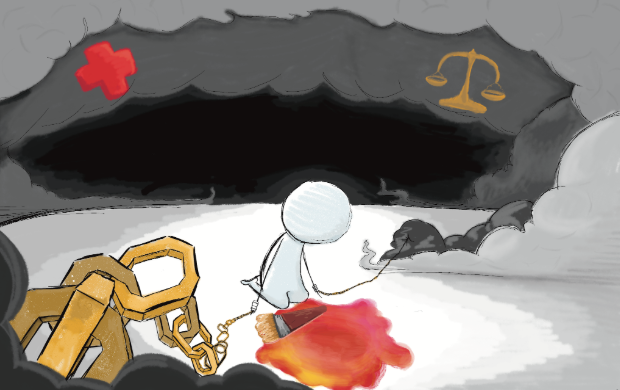


![Many teenagers are reluctant to receive professional support for mental health. There are various factors that play into teens not getting the help that they need. “[Teenagers] might feel that even though they're talking to someone, they still don't feel heard,” freshman Jaeda Gonzales said. “I've noticed that a lot of times when I try to talk to someone about my problems, it doesn't really click [with] them. [It’s] like they're making up their own story about my story in their head and they're just getting it all twisted.”](https://southwestshadow.com/wp-content/uploads/2026/05/mental-help-graphic.jpg)
![Many food trends gain attention because of viral influencers or appealing visual aspects. This has continually drawn approval and admiration from consumers before they had even tried the product. “Food trends [are popular] because it’s such a big build-up, especially from influencers,” junior Myles Jenkins said. “They think something’s cool, then they post it everywhere on social media, and then other people just want to do it so they can experience it and post about it. People want to just feel seen by doing the same thing, especially with food, a common way that people could connect.”](https://southwestshadow.com/wp-content/uploads/2026/04/2-1200x800.png)

Jon Escala • Feb 6, 2026 at
This story was really well written 🙂