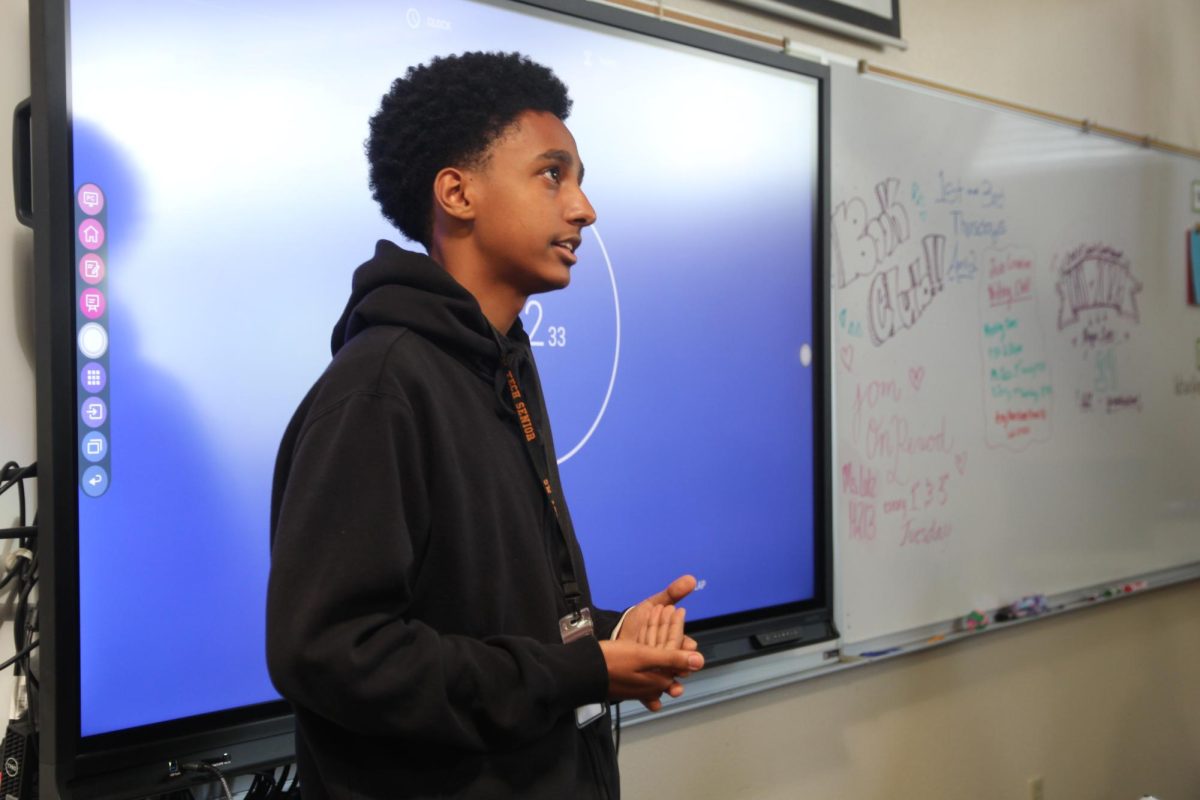
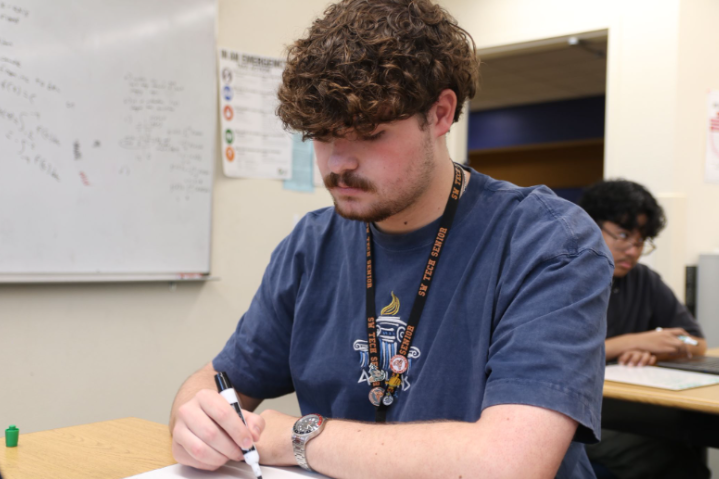
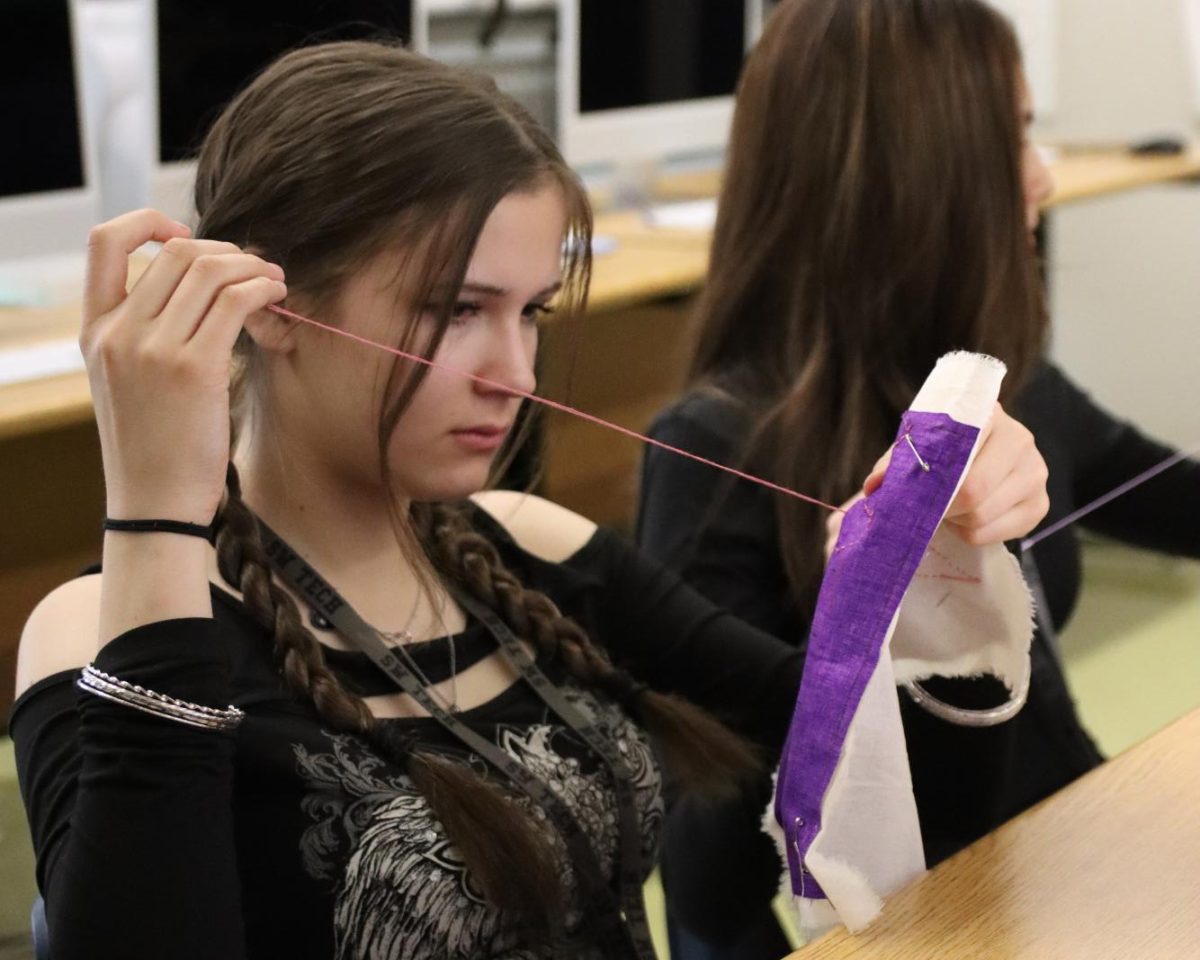
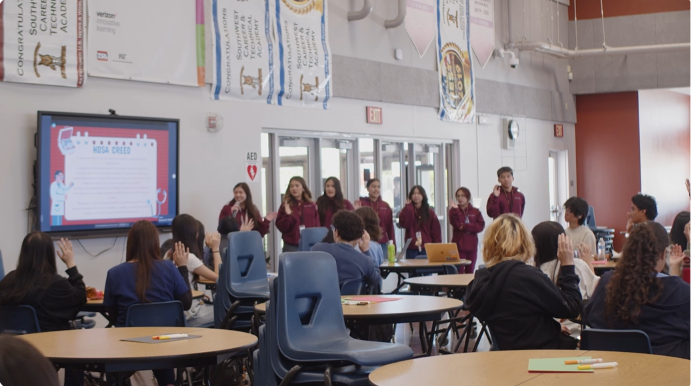
![Working on a project for EDU 250, juniors Zion Jefferson and Bryce Voluntad discuss their work together. The Teacher Academy Pipeline Project has helped the teaching and training classes by bringing them resources for college. “The TAPP program has affected my want to be a teacher because they showed us different environments in classrooms [as well as] various teaching styles,” Jefferson said. “They’re very helpful with helping us understand what we can do our with our future and they explain how Nevada State [University] works”](https://southwestshadow.com/wp-content/uploads/2025/12/IMG_1149-1200x800.jpg)
Due to the elimination of the Title V Hispanic-Serving Institution Grant, a federal grant that supports colleges that have higher percentages of Hispanic or Latino students, the Teacher Academy Pipeline Project (TAPP) offered through Nevada State University will need to rely on outside resources to continue the program.
“At the School of Education, we are searching for funders to continue to support the program at the schools where we have more student interest,” Associate Director of TAPP Rosemary Flores said. “We are strategically developing a plan to deliver services to our TAPP schools and are hopeful that our diverse college students will continue to connect with TAPP high school students, encouraging them to stay the course and continue their journey to become a teacher or to find a career in education.”
TAPP gives students opportunities to be exposed to the teaching profession by partnering with many schools and their Teaching and Training programs to provide pathways to simplify the secondary education process. They supply students with ways to reduce the cost of earning a teaching degree and opportunities for dual enrollment courses to get a head start on college.
“We will not be able to reach the more than 1,000 students we have been connecting with on a yearly basis,” Flores said. “We will no longer have the staff needed to support the program, nor will we be able to pay our college student mentors, who are the ones who present to high school students.”
The potential elimination of the TAPP program affects access to the presentations that the Teaching and Training program used to give.
“What I’ve realized is how much it’s affected the opportunities and experiences that students get to have, like going to the [Nevada State University] campus, [seeing] what it looks like and understanding what the courses are,” Teaching and Training teacher Laura Penrod said. “Teaching and Training 1 and 2 are not getting visits from TAPP at all, which means they’re not even being introduced to the pipeline, so it has affected us in the sense that there’s not as much support for students understanding the progression of the teaching profession.”
With the changes impacting students’ exposure to the teaching career, it also affects students’ financial opportunities.
“I think as a whole, it might create a barrier for students who don’t have the financial means to become teachers,” Penrod said. “With the grant, there was money to help support students going into the teaching profession. So I think that it will create barriers for students who can’t always have the access to income to go to school.”
Even with the uncertainty, project administrators want to try to find ways to continue the program.“I do believe that there is still a chance for teacher pipeline programs to continue,” Flores said. “We need to collaborate with schools and find those systems of support to continue to provide access to diverse students who want to become teachers, making education relevant to our diverse student population.”

![Construction continues at Little China Plaza, located west of Southwest CTA. The project moves toward its expected completion in late 2026. “It’s a cool opportunity to see and know more businesses, because there’s already a new Urban Matcha here,” senior Roman Maynigo said. “I just think [it’s amazing] of the practicality of [everything] in the area.](https://southwestshadow.com/wp-content/uploads/2026/05/Screenshot-2026-05-08-103248.png)