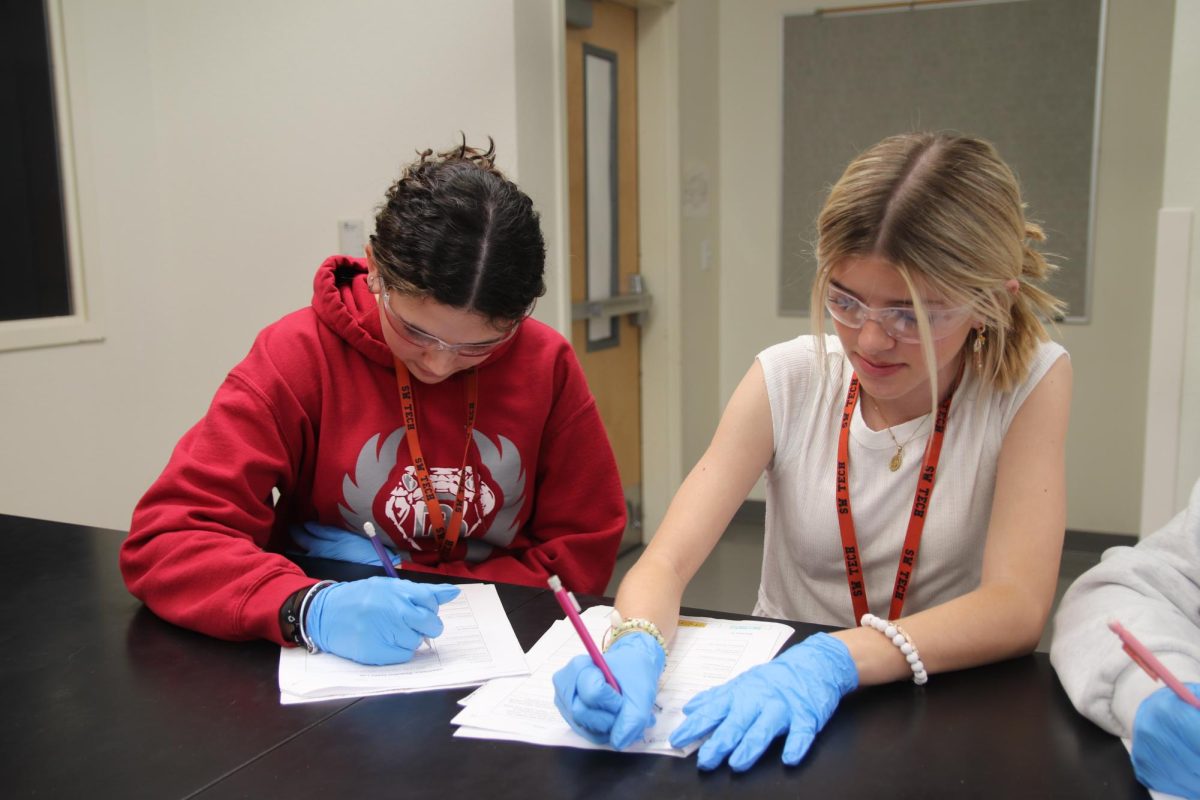
From the bustling, 40-plus-person newsroom to a quiet 15-person AP class, high school students find themselves constantly torn between the intellectual stimulation of smaller class sizes and the upbeat social atmosphere of big classes.
Growing up, most elementary and middle school classes consist of around 25-30 students, a fairly middle ground between large and small classes, giving students the opportunity to experience the little aspects of both class sizes as they grow and develop. However, high school has proven to be a different story entirely. Especially at magnet schools that boast different program areas and more college courses, the number of students in each class varies greatly, fueling the age-old debate: which is better?
“I feel like the teacher pays more attention to the students with smaller classes because they have less, I guess, work to do,” senior Lucy Rodriguez said. “I feel like with smaller classes, we can interact with the teacher more. And I feel like with large classes, it’s much harder for the teacher to interact with you because they pay more attention to the students that need help … With smaller classes, they have the option to help everyone.”
While smaller group dynamics may open the doors for students to bond together without added social pressures, fewer students equate to fewer contributing voices during a discussion, possibly leading to a lack of diverse views and opinions being shared and debated.
“Sometimes group work is harder to assign in smaller classes because the number of people to work with can be limited,” APUSH teacher and STUCO advisor Michael Woxland said. “Large group discussions can be hard to implement in small classes too, because you may not have as many people to share their thoughts with or you may not get as many perspectives in a small group.”
On the other hand, large group dynamics equate to teachers having to do more crowd control and behavioral management, likely leading to their focus being more on taking preventative measures with troubled students rather than helping students to better understand the material.
“When a class is larger, the feel of the class can change into a situation where the teacher is focused on managing behaviors rather than facilitating learning,” Freshman Studies teacher Kimberly Caipa said. “Larger classes can impact student success negatively in many ways. Students who are struggling with a concept oftentimes will try to avoid the class work or collaboration. With larger classes, it becomes difficult for teachers to assess which students are in need of extra assistance.”
Despite some opinions, bigger classes aren’t all bad. In fact, having more students in a classroom can add to the class’s energy, creating an environment that is more energetic and fun, as opposed to the typically more quiet and intellectual environments of small classes.
“Larger classes tend to be more upbeat, more talkative,” Woxland said. “However, sometimes it is easier for quiet students to hide in bigger classrooms. Smaller classes can feel more intimate and you can really see where your students are at more easily because they are not able to hide and rely on the more talkative people in class to carry the weight of the discussion.”
Additionally, with more students per class, students are sometimes able to work together more effectively in pairs or small groups. With more peers’ eyes available to give feedback and help on assignments, sometimes extra guidance from a teacher isn’t as needed.
“Some advantages could be that in larger classes there will be more opportunities for peer-to-peer learning,” sophomore Austin Soliz said. “And it can encourage asking [other students] for help, because having more kids can make it harder for teachers to critically evaluate each student’s strengths and weaknesses.”
From a student perspective, many prefer having smaller class sizes and being able to interact with their teachers more. While some teachers may prefer the high energy environment of a larger class, to students, one on one time with the instructor seems to take priority over having a big class full of friends.
“Relationships with teachers in smaller classes tend to be stronger and they get to know my strengths and weaknesses better,” Soliz said. “Each student in a smaller class gets a more personalized education and can promote learning by giving teachers a chance to help students personally.”
While debates over the pros and cons of different class sizes rage onward, the truth is that both have their strengths and weaknesses and each will appeal differently to teachers and students with different learning styles. The most important thing is to understand which class size works best for each individual and to make the most of whichever classes they end up in.
“Having a smaller class allows for deeper student connections, but you can build relationships with larger classes too,” Woxland said. “It takes me longer to learn names with bigger classes, so it takes more time to build deeper relationships. But it can be done. I strive to build good relationships with all my classes, big or small!”

![Many teenagers are reluctant to receive professional support for mental health. There are various factors that play into teens not getting the help that they need. “[Teenagers] might feel that even though they're talking to someone, they still don't feel heard,” freshman Jaeda Gonzales said. “I've noticed that a lot of times when I try to talk to someone about my problems, it doesn't really click [with] them. [It’s] like they're making up their own story about my story in their head and they're just getting it all twisted.”](https://southwestshadow.com/wp-content/uploads/2026/05/mental-help-graphic.jpg)
![Many food trends gain attention because of viral influencers or appealing visual aspects. This has continually drawn approval and admiration from consumers before they had even tried the product. “Food trends [are popular] because it’s such a big build-up, especially from influencers,” junior Myles Jenkins said. “They think something’s cool, then they post it everywhere on social media, and then other people just want to do it so they can experience it and post about it. People want to just feel seen by doing the same thing, especially with food, a common way that people could connect.”](https://southwestshadow.com/wp-content/uploads/2026/04/2-1200x800.png)