

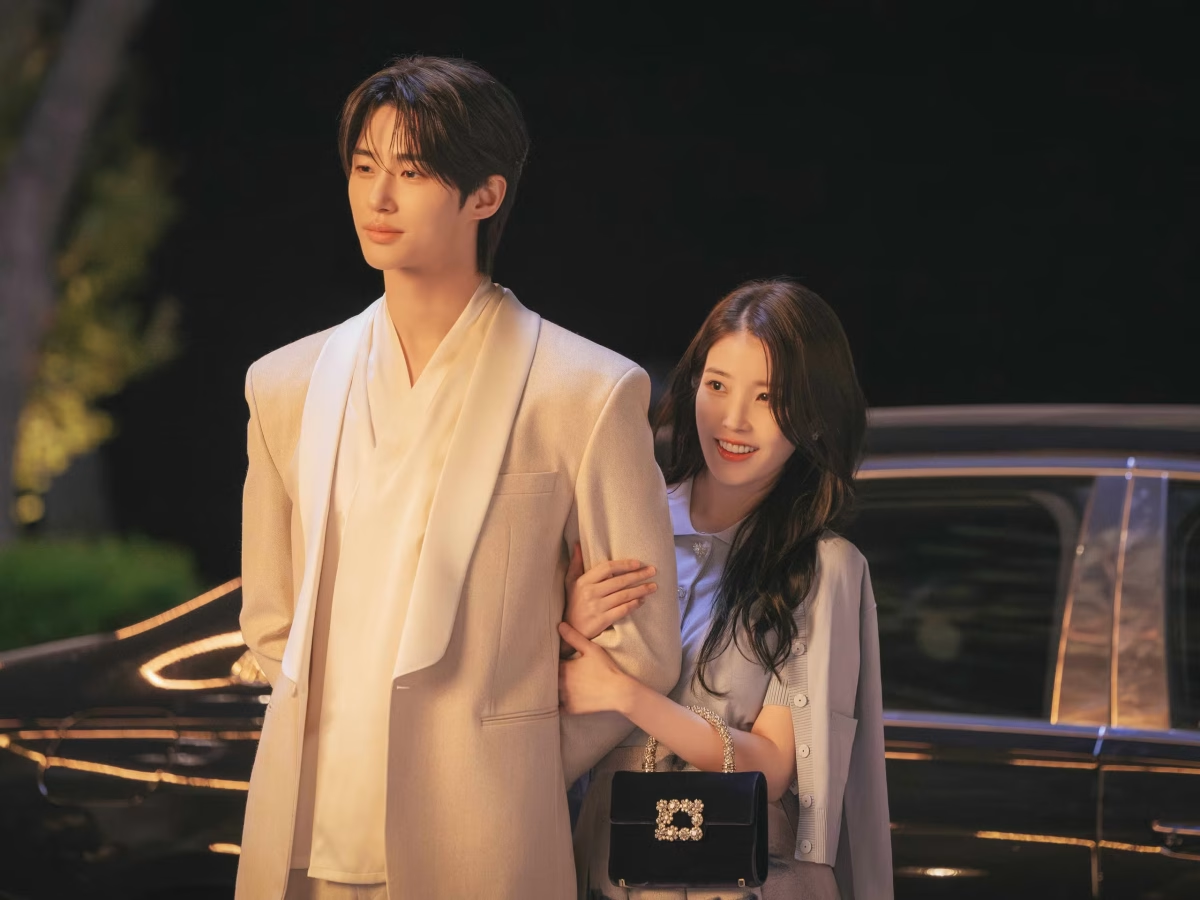
I came across the Gangnam Project in a simple “new releases” section on Netflix. I wanted to avoid this because of the eyesore of a main image; however, leading deeper into the Gangnam Project, it starts with typical K-drama elements, but its heartfelt storytelling and character-focused performances add a surprising depth to the show. While it features an average mean girl and a stereotypical romance, the narrative cleverly develops these themes to deliver an emotional story.
This series opens with a girl named Hannah (Julia Kim Caldwell) having a nightmare of K-pop idols dancing around her, pushing her around during a burst of song. She tries to join in, but the choreography is messy and unstable. Amidst her nightmare, she wakes up to her brother, Leo (Taran Kim), hitting her with a very common line, “It was just a nightmare, calm down.” Later, we find out that Hannah is headed to Korea to be an English tutor for a girl named Chan-Mi (Brianna Kim).
Going into this show, I expected a heartfelt K-drama that you’d find anywhere. However, I was hit with Disney Channel-esque writing. It felt like it was taking aspects of a Disney plot, like a common component of Disney plots of a classic bully and a corny romance with a burst of song out of the blue, which made it feel less exciting, and rather more generic and unoriginal. Later in the show, however, I understood why the Disney-like plot could be unique in its own way and how it can be inspiring to those who see the world as something they could not succeed in because of something else bringing them down.
Hannah, who recently transferred to a K-pop training Academy to be an English tutor, shows how she emphasizes her culture shock as she struggles with the language barrier at school and the expectations placed on her as an English tutor. Her relationship with Chan-Mi, her student, starts out really rocky, with Chan-Mi exhibiting the traits of a common, stereotypical bully, which adds to the tension Hannah was already facing. These early episodes focus heavily on the “mean girl” dynamic and the fish-out-of-water trope, reinforcing that Disney Channel feeling, as small interactions between the characters hint that there is much more beneath the surface of Hannah’s complicated feelings about K-pop.

By the middle of the season, the show begins to shift tone. Instead of focusing on surface-level drama, it starts exploring identity and pressure to belong. Hannah’s connection to K-pop becomes clearer and the emotional stakes grow stronger. Hannah is suddenly offered the position as a trainee instead of just a tutor. This was only the beginning of her new life. The romance aspect develops more naturally here, where Auzzy (Paul Seungbin Lee) Who appears as Hannah’s love intrest discovers his love for Hannah, but instead of expressing it in feelings, he expresses his love in song, making this feel less forced and more rooted within himself. Chan-Mi also becomes more of a layered character; she’s no longer a typical mean girl, but someone dealing with her own insecurities. This makes the show more relatable and also inspiring to those who have trouble expressing their feelings in words, like me, for example.
Deeper into the show, we discover that Chan-Mi was never the bully to begin with; she was just dealing with a deeper aspect of feelings of her own, finding out that her family grew up poor, and she missed her sister. But the true bully was Mina (Kylie Haasz), who is constantly putting Hannah down about herself. But Hannah is told not to worry by Sun Hee (Angela Son), who encourages Hannah to be herself and be unique. These girls ultimately end up in the girl group together.
A few episodes later, the story dives deeper into family relationships and personal ambition. Hannah is forced to confront why her nightmare in the first episode felt so real and symbolic. The choreography, once chaotic and unstable, begins to mirror her internal struggles rather than just serving as a dramatic opening scene. The show becomes less about fitting into a glamorous world and more about finding confidence within it. This is what made me see how relatable this show could get on a deeper level, because I myself have deeper struggles, and this can make anyone see the truth of facing them and coming forward to face them.
Towards the end, the series leans fully into its emotional core. What starts with a seemingly light and predictable teen drama evolves into a story about self-worth. The performances, especially from Julia Kim, carry the weight of the themes, making the final stretch more heartfelt than expected.
In the end, while The Gangnam Project felt weaker with its coverage of the true, defined message, the character development more than makes up for it. What begins as a show that feels safe and familiar slowly reveals itself to be thoughtful and quietly inspiring. While this isn’t a show I would watch again, it carries themes that illuminate the determination of self-worth, and that can motivate anyone.











Rosalinda • May 23, 2026 at
I knew that Hannah and AUZZY kissed